
- Learning Japanese
- Japanese Culture
2026.02.06


Yes—everyone knows what a samurai is.
Folded-steel katana. Absolute loyalty. Ritual suicide to preserve honor.
And you’ve probably heard this too: Japanese people are disciplined, hardworking, loyal, and deeply concerned with honor, responsibility, and social harmony.
But why?
Where did these values come from?
Why do they continue to shape Japanese society centuries after the samurai disappeared?
And what connects medieval warriors to modern Japan?
The answer to all of this is one word: bushidō.
Despite its frequent appearance in movies, books, and pop culture, bushidō itself is often deeply misunderstood. It is sometimes simplified, romanticized, or even equated with militarism, blind obedience, or fanatic self-sacrifice—interpretations shaped more by modern history and popular media than by true history. In reality, bushidō is neither a slogan nor a rigid code. It is a complex ethical tradition that evolved over time and quietly shaped the way people thought about duty, sincerity, honor, and responsibility.
In many ways, bushidō functions as Japan’s moral backbone—an underlying framework that has influenced behavior, relationships, and values long after the age of the samurai came to an end.
The purpose of this article is to clarify what bushidō truly means. By examining its origins, its philosophical foundations, and the way it evolved over time, we can better understand bushidō not as a rigid or extreme ideology, but as a nuanced ethical framework that continues to influence Japanese culture and values today.
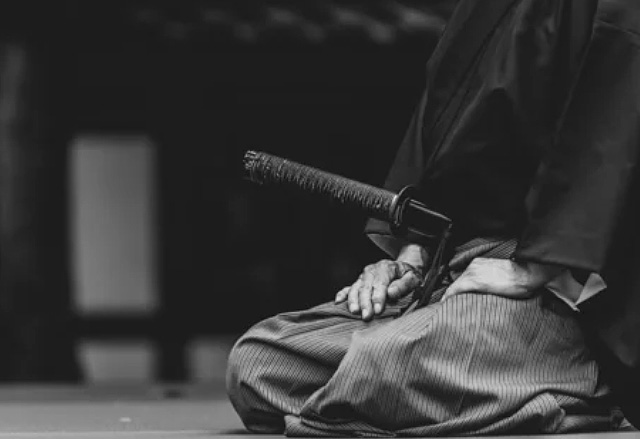
The word bushidō (武士道) is composed of two elements: bushi (武士), meaning “warrior,” and dō (道), meaning “way” or “path.” Together, the term refers not simply to how warriors fought, but to how they were expected to live.
Bushidō did not appear overnight as a written doctrine. Its roots stretch back to the Heian and Kamakura periods, when the samurai class gradually emerged as a distinct social and military group. During this time, warriors were expected to cultivate more than physical strength. They were judged by their conduct, judgment, and sense of responsibility toward others.
These expectations were shaped by several philosophical and religious traditions. Confucian thought emphasized loyalty, hierarchy, and obligation within human relationships. **Buddhism—particularly Zen—**contributed ideas of discipline, self-control, and acceptance of impermanence. Shinto reinforced reverence for ancestors, ritual purity, and continuity with the past.
Rather than producing a strict rulebook, these influences blended into a shared ethical outlook. Over time, this outlook came to define what it meant to act “properly” as a warrior—and later, as a member of Japanese society more broadly. Long before bushidō was clearly articulated or named, it was already taking shape as Japan’s moral foundation.

At its core, bushidō is not simply a code of honor for warriors.
It is a way of understanding how power, responsibility, and morality must coexist.
Like medieval Europe, Japan developed an ethical ideal for its warrior class. Western chivalry was shaped largely by Christian theology—emphasizing obedience to God, divine justice, and moral absolutes rooted in religious doctrine. Bushidō, by contrast, emerged from a different foundation. It was shaped not by a single sacred text, but by lived experience—blending Confucian ethics, Buddhist discipline, and Shinto reverence into a distinctly Japanese moral worldview.
What makes bushidō unique is its emphasis on balance rather than absolutes.
There was no promise of salvation, no external judgment after death. Instead, moral responsibility rested squarely on the individual. A warrior was expected to cultivate judgment, self-control, sincerity, and compassion—not because a god commanded it, but because power without a strong moral foundation was considered dangerous.
To better understand this ethical system, later thinkers articulated bushidō’s spirit through what are often called the seven virtues.
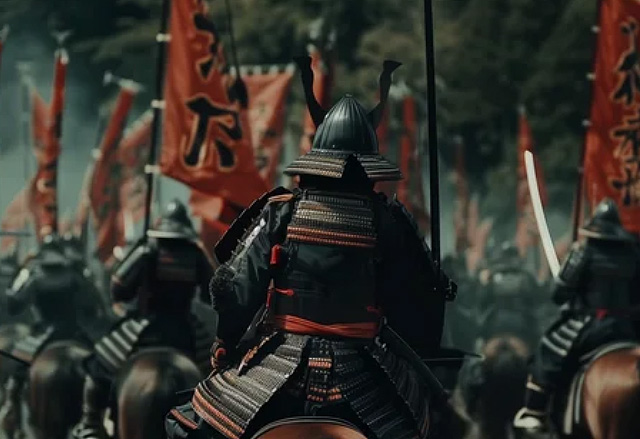
The core virtues of bushidō were never meant to exist in isolation. Bushidō emphasized balance—martial strength guided by moral judgment, and power restrained by ethical responsibility.
Gi refers to the ability to judge what is right and to act accordingly, even when doing so is difficult or costly. For the warrior, righteousness meant more than following orders—it meant possessing a personal moral compass and taking responsibility for one’s choices. Without gi, strength becomes mere violence.
Yū is often misunderstood as fearlessness in battle, but its deeper meaning is moral courage. True courage includes the willingness to do what is right, to speak honestly, and to act decisively—even when afraid. In bushidō, recklessness was never praised; courage had to be guided by judgment and restraint.
Despite its association with warriors, bushidō placed great importance on jin, or compassion. Power carried responsibility, and those with strength were expected to protect the weak and act with humanity. This virtue reminds us that bushidō was not solely about combat, but about ethical conduct within society.
Rei governs how one treats others. Courtesy, self-control, and respect—even toward adversaries—were seen as essential expressions of inner discipline. Through rei, bushidō rejected brutality and emphasized dignity in both victory and defeat.
Makoto represents truthfulness and integrity. A warrior’s word was expected to carry weight; deception and empty promises undermined trust and honor. In bushidō, sincerity was not merely personal virtue—it was the foundation of reliable relationships.
Meiyo reflects one’s reputation, but more importantly, one’s sense of self-worth rooted in ethical behavior. Honor was earned through consistent action, not through status or recognition alone. It functioned as an internal standard, guiding behavior even when no one was watching.
Perhaps the most misunderstood of the seven virtues, chūgi is often reduced to blind obedience. In reality, loyalty in bushidō was neither mindless submission nor casual affiliation—it was a moral and relational commitment.
True loyalty was grounded in gratitude and trust. A warrior was expected to remember the care, protection, and guidance they had received, and to repay that debt through steadfast service and action. Loyalty was not conditional on convenience or personal comfort; abandoning someone simply because circumstances became difficult was considered a form of betrayal.
At the same time, chūgi was never meant to erase conscience. Loyalty without righteousness was not virtue—it was corruption. A warrior was expected to remain faithful while also exercising judgment, sincerity, and moral responsibility.
Taken together, these seven virtues reveal bushidō not as a doctrine of domination or fanatic sacrifice, but as a moral system built on equilibrium. Physical strength was respected—but only when tempered by compassion, integrity, and judgment.
★Also try reading:
12 of the Most Famous Samurai in Japanese History | Introducing Legendary Swordsmen and Warlords
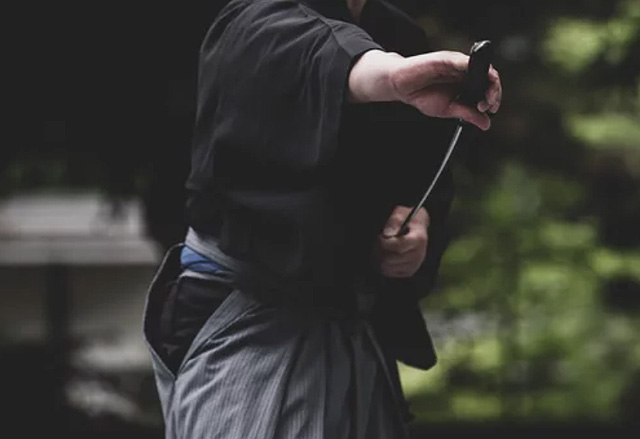
Bushidō was not a philosophy meant only for reflection—it was something practiced in everyday life. Its values took shape through routine, responsibility, and repeated acts of self-discipline.
A samurai’s daily life combined training with service. Martial training included swordsmanship, archery, and horseback riding, but these skills were practiced not for spectacle, but for control. Precision mattered more than brute force. A warrior was expected to remain calm, accurate, and deliberate—especially under pressure. Training aimed to cultivate steadiness of mind as much as strength of body.
Service to one’s lord (daimyō) extended far beyond combat. Many samurai spent most of their lives performing administrative work, managing land or finances, guarding estates, escorting officials, or resolving disputes. Bushidō shaped how these tasks were carried out: with seriousness, fairness, and reliability. A trusted samurai was one whose judgment could be relied upon over time—not someone seeking attention or dramatic recognition.
Bushidō also governed how one behaved in ordinary interactions. From the way a samurai spoke to superiors, handled weapons in public, or conducted negotiations, behavior was expected to reflect composure and respect. Etiquette was not empty formality—it was a visible expression of self-control. Losing one’s temper, humiliating others, or abusing authority signaled weakness of character rather than strength.
This emphasis on dignity extended even into moments of conflict. Whether in argument or battle, how a samurai carried himself mattered. Speaking with restraint, treating opponents with respect rather than contempt, and maintaining composure under provocation were all seen as signs of inner discipline. True character was revealed in how one treated their opponent and held themselves on the battlefield, much more than victory itself.
Perhaps no aspect of bushidō is more misunderstood than seppuku (ritual suicide). Often sensationalized or reduced to a symbol of fanaticism, seppuku was not a glorification of death. Rather, it represented an extreme expression of accountability. In a society where honor and responsibility were inseparable, seppuku was seen as a final way to take ownership of one’s actions when moral failure could not be otherwise reconciled. While deeply tied to its historical context, it underscores how seriously personal responsibility was taken within bushidō.
★Also try reading:
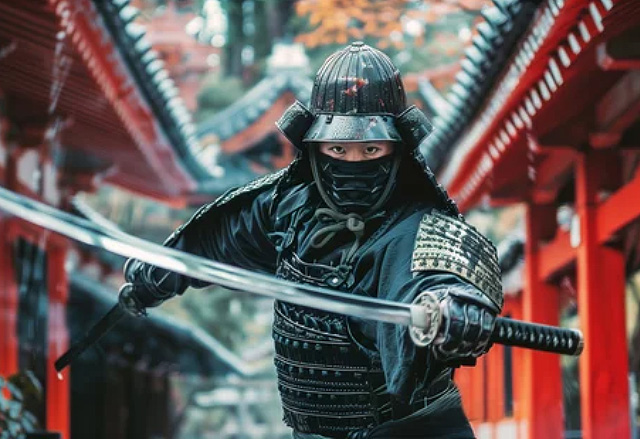
Bushidō did not remain static. As Japan’s political and social conditions changed, so too did the way bushidō was understood and applied.
During the Edo Period (1603–1868), Japan experienced prolonged peace under the Tokugawa shogunate. With large-scale warfare largely absent, samurai were no longer defined primarily by battlefield experience. In this context, bushidō evolved into a more explicit moral philosophy, emphasizing education, self-cultivation, and ethical conduct over combat prowess. The “way of the warrior” increasingly became a guide for personal behavior rather than a code for war.
The Meiji Period (1868–1912) brought even greater transformation. As Japan modernized rapidly and the samurai class was officially abolished, bushidō lost its original social foundation. Rather than disappearing, however, it was reinterpreted—recast as part of a broader national identity. Elements of bushidō were promoted as shared cultural values, extending beyond warriors to the population at large.
In the 20th century, particularly during the years leading up to and including World War II, bushidō was distorted by the state. Selective interpretations were used to justify extreme nationalism, unquestioning obedience, and sacrifice for the nation. In this form, bushidō was stripped of its emphasis on moral judgment, balance, and personal responsibility, and repurposed as a tool of ideology. This period played a major role in shaping many of the modern misconceptions that still surround bushidō today.
★Also try reading:
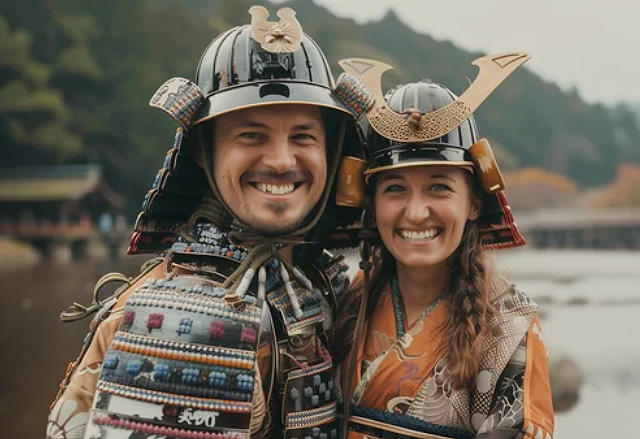
Although the age of the samurai has long passed, the influence of bushidō has not disappeared. Instead, its values have quietly adapted to modern contexts, continuing to shape behavior, expectations, and ideals in contemporary Japan.
In present-day Japanese society, echoes of bushidō can be found in professional ethics and workplace culture. Concepts such as loyalty, perseverance, responsibility, and pride in one’s work remain highly valued. Long-term commitment to an organization, attention to detail, and the expectation to act with integrity even when unobserved reflect ethical patterns that trace back to bushidō’s emphasis on reliability and self-discipline. While modern life no longer demands martial readiness, it still rewards composure, accountability, and consistency.
Bushidō also lives on through martial arts, where training is as much about mental discipline and respect as physical technique. Arts such as kendō, jūdō, and aikidō preserve the idea that true strength lies in control, awareness, and ethical conduct rather than domination. The practice of bowing, adherence to etiquette, and emphasis on character development reflect bushidō’s enduring influence.
Globally, bushidō continues to captivate audiences through literature, film, anime, and popular culture. The samurai remains a powerful symbol, representing ideals of honor, resolve, and moral struggle. However, this fascination often comes with simplification. Dramatic portrayals tend to emphasize violence or sacrifice while overlooking bushidō’s deeper ethical balance and emphasis on judgment, restraint, and responsibility.
This leads to one of the most persistent misconceptions: bushidō is not synonymous with militarism. While its image was distorted and politicized in the 20th century, bushidō itself is not an ideology of aggression or blind obedience. Understanding the distinction between its historical ethical foundations and its later political misuse is essential to understanding Japan more accurately.
Even in the field of education, bushidō offers valuable insights. For learners of Japanese, understanding these values provides important context for communication styles, social expectations, and ways of thinking that language alone cannot fully explain. Language reflects culture—and culture reflects deeply rooted ethical traditions.
At Oku Sensei’s Japanese, we believe that meaningful language learning goes beyond vocabulary and grammar. We place great importance on helping students understand not only how Japanese is spoken, but why it is used the way it is—by exploring the cultural and spiritual foundations that shape the language itself.

Bushidō should be understood not as a rigid rulebook or a relic of the past, but as a nuanced and evolving ethical tradition. Throughout its history, it has adapted to changing social realities while continuing to emphasize integrity, discipline, responsibility, and honor.
Its enduring appeal lies precisely in this flexibility. Bushidō does not demand perfection or blind sacrifice. Instead, it challenges individuals to cultivate judgment, self-control, sincerity, and respect—qualities that remain relevant in both personal and societal contexts today.
Like all cultural traditions, bushidō deserves to be understood in its full complexity, not reduced to stereotypes or extreme interpretations. When viewed carefully, it offers insight not only into Japan’s past, but into the values that continue to shape its present.
The principles embodied in bushidō—such as sincerity, discipline, and honor—are deeply connected to both language learning and cultural understanding. At Oku Sensei’s Japanese, we emphasize not just linguistic knowledge, but a deeper, more essential understanding that includes Japan’s spirit, history, and values.
If you are interested in learning Japanese in a way that goes beyond memorization and truly connects language with culture, we invite you to take advantage of our free consultation.