

- Japanese Culture
2026.02.26


For many Japanese learners, fluency feels like something that should naturally happen once you arrive in Japan. The logic seems simple: surround yourself with the language, hear it every day, and eventually it will sink in.
It’s a deeply intuitive idea — and one we hear all the time.
“Do I need to live in Japan and immerse myself to actually get good at Japanese?”
The question makes sense. After all, immersion works in many other contexts. If you live in a country long enough, shouldn’t fluency follow?
The reality, however, is far less romantic.
Unfortunately, living in Japan does not automatically lead to Japanese fluency. Many people discover this only after months or even years of living in Japan with surprisingly little progress to show for it. Fluency doesn’t come from proximity alone — it comes from structured, comprehensible input, consistent output, and the willingness to step outside your comfort zone.
Immersion can be powerful. But only when you’re prepared to make use of it.
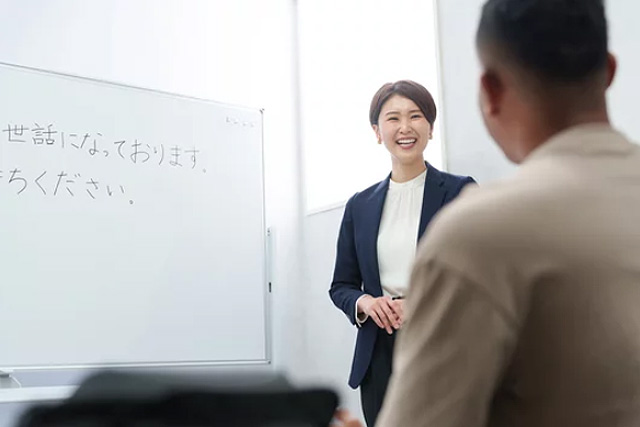
The idea that language can be absorbed effortlessly through exposure — often described as “learning by osmosis” — is deeply ingrained in how people think about immersion. Popular stories, study-abroad narratives, and social media reinforce the belief that simply being there is enough.
Part of this belief comes from real experiences with other languages. For English speakers, immersion in Spanish or French can often produce visible results, even in the early learning stages. These languages share vocabulary roots, sentence structures, and even cultural assumptions with English. According to the Foreign Service Institute, they fall into the easiest categories for English-speaking learners.
Japanese is fundamentally different.
New writing systems. New grammatical logic. New vocabulary with little overlap. Completely alien cultural cues embedded directly into the language itself. Expecting fluency to emerge from unstructured exposure in Japanese is like hoping to master advanced calculus by staring at equations without ever learning basic math. Without a foundation, your brain simply doesn’t know what to do with what it’s seeing and hearing.
At Oku Sensei’s Japanese, we’ve seen this pattern again and again. Students arrive in Japan full of excitement, convinced that immersion will finally unlock fluency — only to be shocked by how little progress passive exposure actually produces. In fact, there are many cases we have personally dealt with of students actually seeing their Japanese become WORSE after studying abroad through their University program, shortly after which they graduate, leaving their Japanese ability at a sub-par, low intermediate level.
The myth persists not because learners are lazy or unrealistic, but because immersion feels like it should work. The problem isn’t immersion itself. The problem is expecting immersion to do the work without substantial preparation and effective use of the immersion environment.

At the heart of the immersion myth lies a simple misunderstanding: exposure is not the same as learning.
Being surrounded by Japanese does not automatically mean the brain is acquiring it. Without a framework to interpret what is being heard, immersion quickly becomes background noise. Words, phrases, and sounds pass by continuously, but they fail to stick—because there is no structure in your brain to attach them to.
This becomes apparent very quickly for many learners after arriving in Japan. Even those who studied seriously beforehand often find themselves understanding far less than expected. A cashier says something routine. A coworker asks a basic question. A train announcement plays overhead. What becomes clear is that native-speed Japanese, used naturally by locals, operates far beyond what an unprepared brain can process.
I remember reaching this realization myself, despite having prepared carefully. It wasn’t discouraging so much as clarifying: immersion was not going to teach me Japanese on its own.
This is not a personal shortcoming. It is a predictable outcome of how language acquisition works.
When speech is too fast, vocabulary too dense, or context too unfamiliar, the brain cannot reliably extract meaning. Instead of learning, it becomes overloaded. Much real-world “immersion” is therefore filtered out—not consciously, but automatically—because the input is unusable in its raw form.
This is why immersion without preparation often produces only survival Japanese. Learners acquire just enough language to function: ordering food, paying bills, exchanging greetings, navigating routine tasks. These skills are genuinely useful, and reaching this stage deserves recognition. But they rarely expand on their own. Once daily life becomes manageable, progress slows—and often stops. Think about immigrants you know in your home country who have lived there for years, but still can’t speak the native language well. I’m sure you’ve met many of them before; at restaurants, supermarkets, stores, parents of your friends, etc. Don’t you think it’s odd that they still can’t speak well? They are “immersed” in the language every day, no? In reality, they are not truly “immersed”; they moved abroad without a proper linguistic foundation, and as such can’t properly absorb the target language to create a solid mental structure for genuine fluency. If you go to Japan without being prepared, you will end up exactly like this.
Living in Japan is no different from any other skill context in this respect. Moving to France will not make someone a chef, even if they eat French food every day. Mastery comes from understanding the structure behind what one is experiencing—not from proximity alone.
Another critical limitation of immersion is that it does not automatically require active language use. Listening alone is insufficient for sustained progress. Speaking and writing force learners to confront gaps—what they want to say but cannot yet express—and those gaps drive growth.
In Japan, it is entirely possible to avoid this discomfort. People often switch to English out of kindness. Social circles form where Japanese is unnecessary. Work environments function bilingually. None of this happens by accident. Learners decide—consciously or not—who they spend time with, what language they default to, and how much effort they are willing to sustain.
Immersion does not fail because of chance.
It fails when learners allow comfort to replace intention.
This is where mindset becomes decisive.
Immersion does not guarantee the right mental approach. It is easy to remain inside familiar comfort zones: foreign friends, English media, predictable routines. Japan can feel challenging on the surface while still allowing learners to avoid meaningful linguistic growth. Real progress requires motivation, accountability, and the willingness to repeatedly step into situations where Japanese ability is genuinely tested.
Without this, immersion leads to a plateau. “Good enough” becomes the ceiling. Communication works. Daily life functions. And improvement slows to a crawl. Without reinforcement—reviewing fundamentals, expanding vocabulary, strengthening grammar, and steadily increasing difficulty—fluency never fully develops.
What consistently does work is prepared, intentional immersion.
Learners who make real progress are not relying on immersion to teach them Japanese. They use immersion to activate and reinforce what they have already studied. Grammar gives structure to what they hear. Vocabulary and kanji make signs and written information readable. Structured listening trains the ear. Speaking and writing turn comprehension into usable skill. Regular review prevents progress from evaporating.
This process is demanding. Progress often feels invisible for long stretches. I experienced this myself, and I see it repeatedly in serious learners: weeks or even months of effort with little apparent payoff, followed by sudden, unmistakable improvement. Language growth is incremental, not linear—and persistence is non-negotiable.
Immersion becomes powerful only at this point—when the learner is ready to make use of it.
Without a foundation, active mindset, and effective daily proactive study, immersion is not merely inefficient; it can be misleading. Learners may believe they are “learning naturally,” while in reality they are reinforcing avoidance, reliance on English, and comfortable routines. This is why so many study-abroad students return home disappointed—not because they lacked ability, but because they misunderstood how immersion actually works.
Living in Japan exposes learners to Japanese every day.
Fluency comes from turning that exposure into understanding—and understanding into deliberate, sustained use.
★Also try reading:From Zero to Fluent in Japanese: The True Story of How I Mastered Japanese and Changed My Life - Part 4: Walking the Fire – The Reality of Living in Japanese
By the time learners reach this point, many already feel that immersion alone is not working. What research helps clarify is why this experience is so consistent, across learners, languages, and study-abroad programs.
Decades of second-language acquisition research point to the same conclusion: exposure alone does not produce fluency unless the language is comprehensible.
Research published through Cambridge University Press, including large-scale analyses of study-abroad outcomes, shows that learners surrounded by a target language do not automatically outperform those studying at home. When speech is too fast, vocabulary too dense, or context too unfamiliar, learners struggle to extract meaning. Instead of acquiring the language, the brain becomes overloaded and disengages.
This distinction—between raw exposure and usable input—explains why immersion often fades into background noise, even after months or years abroad. It also explains why structured learning environments, when properly designed, frequently outperform “natural immersion,” especially in linguistically distant languages like Japanese.
Research also makes clear that listening and reading alone is insufficient for fluency.
Linguist Merrill Swain’s widely cited Output Hypothesis demonstrates that learners must actively produce language—through speaking and writing—to make meaningful progress. Output forces learners to confront gaps between what they want to say and what they can say, and those gaps drive acquisition.
In real-world immersion settings, however, output is surprisingly easy to avoid. Case studies published in language-learning journals affiliated with institutions such as the University of Cambridge show that native speakers frequently default to English when communicating with foreign residents. Over time, this sharply reduces opportunities for sustained target-language use, even for learners who are motivated.
The result is a familiar pattern: learners recognize words and phrases but struggle to control the language actively.
These findings help explain a long-observed paradox in language education: study-abroad learners often make gains comparable to—or only slightly better than—students who never leave their home country.
Research summarized in publications from Cambridge University Press shows that location alone is not the determining factor. Instead, outcomes depend on whether immersion is paired with continued structured study, consistent output, and intentional engagement. Learners who assume immersion will “do the work” often plateau early, while those who treat immersion as an active training ground experience far greater gains.
This aligns closely with what educators see in practice: disappointment after study abroad is common not because students lacked opportunity, but because they misunderstood how immersion actually functions.
Research also highlights that immersion outcomes are shaped as much by learner behavior as by environment.
Studies shared on academic platforms such as ResearchGate, including work on Indonesian learners living in Japan, show that motivation, learner identity, and social integration choices strongly influence progress. Learners who see themselves as active users of the language, intentionally seek challenging interactions, and have a strong will to integrate into the culture—consistently outperform those who retreat into familiar social circles of other foreigners.
Immersion does not override these dynamics. It magnifies them.
In Japanese immersion specifically, cultural factors add an additional layer of complexity.
Analyses reported in outlets such as Wired have highlighted how Japanese communication relies heavily on implicit context, indirect expression, and shared cultural assumptions. For learners, this can make interactions feel confusing even when vocabulary and grammar are familiar. Without guidance, these misunderstandings can erode confidence, cause emotional stress, and reduce willingness to engage.
Across institutional research and lived experience, the conclusion is remarkably consistent:
Immersion works best when it is used deliberately, by learners who already have the tools to benefit from it and the mindset to push beyond comfort.
This is not a criticism of learners who struggle abroad. It is a clarification of expectations—and an invitation to approach immersion with intention rather than hope alone.

Once the fundamentals are clear, the outcomes of unprepared immersion become very predictable.
One common path is part-time work in convenience stores or restaurants. While useful at first, these jobs rely heavily on fixed, repetitive phrases. Learners become fluent in a narrow script, but rarely expand beyond it. The language works for the job—but stops growing.
Another frequent issue is locals switching to English. Often this is done out of kindness or efficiency, but the result is fewer opportunities to practice Japanese meaningfully. The learner starts to give up trying to speak Japanese with locals, defaulting to basic English communication. Not only will these learners never become fluent in Japanese, but they will often never make close or meaningful connections with the Japanese people. Interactions stop at a surface level, and they go back to their home country without ever truly understanding or learning from what Japan really has to offer.
Many learners also fall into an international student bubble. You go to Japan without a solid foundation in Japanese, making it impossible to form connections with everyday Japanese people. Because you can’t make connections with normal Japanese people, you get lonely, and seek the easy route; solve your loneliness by making international friends. Then, ironically, because you spend all your time with your international friends speaking in English, your Japanese never genuinely improves, and you go home. Daily life is shared with other foreigners, social interactions happen in English, and Japanese becomes something used only as a gimmick. Authentic interaction exists—but only with other foreigners.
Then there is the well-known English teacher paradox. It is entirely possible to live in Japan for years, work full-time, and function comfortably—while using very little Japanese at all. The school, students, and your colleagues all expect you to teach and speak to them in English constantly, making focused practice and study on your Japanese extremely difficult.
Many study-abroad students return home around the N4–N3 level, frustrated and confused about why so much time in Japan produced so little progress. However, don’t worry; there is a way around this, which we’ll explain in the next section.
★Also try reading:Before You Learn a Single Word of Japanese, Read This

Living in Japan does not create fluency by itself.
But when used correctly, it can dramatically accelerate progress.
The difference lies in preparation, structure, and daily intent.
Immersion works best after a learner has a solid base.
That means:
For most English-speaking learners, this corresponds roughly to a strong N3-level foundation. Earlier than that, too much of what you hear remains noise. At this level and above, immersion starts to become usable input instead of overwhelm.
This is why many learners feel shocked when they arrive in Japan: they expected immersion to build the foundation, when in reality immersion assumes one already exists.
Once in Japan, immersion should activate what you’ve already studied, not replace it.
That means:
Daily review is crucial. At the end of each day, review everything you learned that day, making sure you understand and remember the content. Without it, experiences fade as quickly as they arrive. With it, your understanding and retention will explode, and everyday encounters compound into real progress.
Immersion is not passive. It is shaped by choices. Learners who make progress are deliberate about who they spend time with, which environments they work in, and how often they rely on English.
Avoiding exclusively foreign social circles, English-heavy jobs, or situations where Japanese is optional makes an enormous difference. Progress comes from environments where Japanese is necessary but supportive, not overwhelming or easily bypassed.
Memorizing fixed expressions can make life easier, but it does not lead to fluency.
What matters is building the internal structure of the language:
This is the difference between functioning and progressing.
Immersion is exhausting. Progress is non-linear. Plateaus are normal.
The learners who succeed are not the most talented — they are the most consistent. They keep studying when they’re tired, reviewing when it feels repetitive, and pushing themselves even when progress feels invisible.
This is where guidance, structure, and external accountability matter most.
At OSJ, we see this distinction clearly. Students who prepare thoroughly before going to Japan — and continue structured learning with someone to guide them while there — experience infinitely better results than those who don’t. Instead of feeling lost, they feel challenged but capable. Every interaction becomes meaningful input. Every day adds something tangible.
Japan doesn’t teach Japanese for you.
It simply amplifies whatever learning system you already have.
When learners arrive prepared and stay intentional, Japan can become one of the most powerful learning environments available. But as this article has shown, living in Japan is not a prerequisite for progress.
What truly matters—whether you live in Tokyo, New York, or anywhere else—is structured, comprehensive learning from beginning to end. Grammar that builds understanding. Vocabulary and kanji that connect meaning. Listening and output that reinforce each other. And a system that keeps learners accountable when motivation fades.
In other words, the same framework that makes immersion effective is what makes progress possible anywhere.
That is why the smartest path forward is not hoping that the environment will do the work—but choosing a learning structure that consistently does.
★Also try reading:From Zero to Fluent in Japanese: The True Story of How I Mastered Japanese and Changed My Life - Part 5: Walking the Fire – Where Words Fail – and Growth Begins

Whether you plan to live in Japan or not, the most effective way to learn Japanese is the same:
build a strong foundation first, then apply it deliberately.
That is the core philosophy behind OSJ courses—and why they work.
OSJ allows you to meet your Japanese learning goals how you want, when you want, while ensuring you never lose structure or momentum.
If you don’t plan to live in Japan, OSJ courses are designed to give you practical, usable Japanese from the comfort of your home. Students build grammar, vocabulary, kanji, listening, speaking, reading, writing, and cultural understanding in a structured way—so progress doesn’t depend on immersion at all.
For learners who do plan to live or stay in Japan long term, OSJ provides focused preparation so immersion becomes comprehensible and effective. With a strong base in grammar, vocabulary, kanji, and listening, real-world Japanese turns into reinforcement instead of frustration.
For learners already living in Japan—including English teachers—OSJ ensures progress doesn’t stall. Continued structure, speaking practice, and accountability prevent “survival Japanese” from becoming the ceiling.
OSJ provides practical guidance at every stage through:
Structured learning combined with immersion consistently outperforms unprepared immersion alone.
OSJ also provides corporate training programs for professionals working in Japanese companies
(詳細は日本語ページをご覧ください).
Whether you live in Japan or not, OSJ courses give you the structure to make real progress—and keep making it without stagnation.

Living in Japan is an incredible opportunity.
But it is not a magic pill.
As this article has shown, fluency does not come from hoping immersion will do the work for you. It comes from structured preparation, comprehensible input, consistent output, and the courage to apply what you’ve learned.
Japan does not replace learning.
It reveals the quality of it.
With the right foundation, Japan can bring Japanese to life in powerful ways. Without it, even years of exposure can slip by with little to show for it.
At OSJ, students make progress on their own terms. Some prepare before going to Japan and thrive once they arrive. Others build strong Japanese skills entirely from home. Either way, the path is the same: structure first, immersion second.
Fluency doesn’t come by osmosis.
Build the base—then let Japan bring it alive.
If you’re ready to take the first step, we invite you to book a free consultation and start building the foundation that makes real progress possible.
Sources:
(Additional concepts: Cognitive load and attrition) ESL Languages Blog (2023). “Use it or lose it: Can you forget your second language?” (Notes that skills can deteriorate after leaving immersion if not maintained, and that enthusiasm for the culture aids retention)
Before article

12 Scenic Spots Where You Can See Breathtaking Views of Fuji-san (富士山)! When Is the Best Time to Enjoy the Most Spectacular Scenery?
Next article
“What Kind of Swords Did Samurai Use? Explaining the Types of Japanese Swords and the Masterpieces of Japanese Swords Known as the ‘Tenka Goken’”