

- Learning Japanese
2026.02.08


If you’re studying for JLPT N3, chances are you feel stuck in the middle.
Beginner learners usually know exactly what to do. Their listening materials are simple and predictable—basic greetings, restaurant conversations, slow and clearly articulated Japanese designed for newcomers.
Advanced learners, on the other hand, have options everywhere. Anime, YouTube, podcasts, dramas, interviews—once your listening is strong enough, authentic Japanese becomes both accessible and enjoyable.
But N3 learners are caught in the muddy middle.
Beginner audio feels painfully slow and childish.
Native content feels impossibly fast and overwhelming.
Many students describe it the same way:
“Listening at N3 feels impossible. Everything is either baby Japanese or way too hard.”
This frustration is one of the most common concerns we hear from students at Oku Sensei’s Japanese— listening in particular feels like quicksand. Despite studying Japanese for years, listening ability seems to stagnate, and there doesn’t seem to be any clear path forward to true improvement.
The good news?
This struggle is normal, and it is not a sign that you are doing something wrong.
The problem isn’t your ability—it’s that most learners don’t have a clear, realistic roadmap for this stage.
In this article, we’ll give you exactly that:
Most importantly, we’ll show you how to make listening practice manageable, enjoyable, and something you look forward to—not something you dread.

The reason JLPT N3 listening feels uniquely hard is that several gaps collide at the same time.
At the N3 level, learners typically know around 3,000 words.
That sounds like a lot—until you compare it to native content, which often assumes knowledge of 10,000 words or more.
When you listen to real conversations, your brain is constantly encountering unknown vocabulary, making it hard to keep up even if you understand fundamental grammar and vocab.
JLPT listening audio—especially at the N5 and N4 levels—is artificially slow and carefully articulated. This is helpful at the beginning, but it creates a shock when learners transition to real Japanese.
Native podcasts, conversations, and videos move at full speed, with natural rhythm, contractions, and idiomatic/filler expressions. The jump from test audio to real speech can feel brutal.
Textbook CDs and test-style drills are often boring.
Authentic content, on the other hand, feels exciting—but overwhelming.
Many N3 learners get stuck between the two:
This motivation gap is where many learners quietly lose confidence.
From a teacher’s perspective, this is the exact point where students “hit the wall.” We see it again and again. Learners haven’t failed—they’ve simply outgrown beginner tools without yet having the right intermediate ones.
The most important thing to understand is this:
N3 listening is difficult by design.
It’s an awkward transition stage. And the solution isn’t to push harder—it’s to use resources that are specifically built to bridge this gap.
That’s exactly what we’ll explore next.

Not all listening materials are created equal—especially at the JLPT N3 level. The difference between progress and frustration often comes down to resource quality, not effort.
So what actually makes a listening resource effective at this stage?
An effective N3 resource must sit in the “just right” zone.
If it’s too easy, you don’t grow.
If it’s too hard, you shut down.
The best materials challenge you slightly above your comfort level—enough to stretch your listening without overwhelming it. This balance is crucial at N3, where learners are transitioning from controlled audio to real Japanese.
No matter how “pedagogically sound” a resource is, it won’t help if you hate using it.
If you’re bored, you won’t stick with it.
If you’re anxious, you’ll avoid it.
Effective N3 resources are interesting enough to keep you coming back—with topics, voices, or formats that feel human rather than mechanical.
At the intermediate level, listening without confirmation is inefficient.
Transcripts allow you to:
Without transcripts, many learners repeat the same mistakes without realizing it, and fail to effectively deepen their understanding through listening practice.
For most learners, 10–25 minutes is the sweet spot.
Short enough to fit into daily life.
Long enough to build momentum and immersion.
Resources that demand an hour of intense focus every day are rarely sustainable.
At the JLPT N3 level, strong listening ability comes from exposure to many everyday topics and contexts, not only repeating the same type of audio over and over. A well-rounded learner regularly hears Japanese used in different real-world situations.
Use the categories below as a practical checklist when choosing listening materials or tracking your weekly practice:
|
Daily Life & Practical Japan |
Personal & Narrative |
Society & Culture |
Media & Modern Life |
History, Geography & Politics (Light) |
|---|---|---|---|---|
|
Daily routines |
Personal experiences |
Customs & etiquette |
Social media trends |
Japanese history (simplified) |
|
Work & office life |
Life in Japan stories |
Social norms |
Internet culture |
Historical figures |
|
School & student life |
Culture shock |
Festivals & traditions |
YouTube & creators |
Cultural origins |
|
Shopping & services |
Work & study experiences |
Education system |
Pop culture topics |
Geography & regions |
|
Transportation |
Hobbies & lifestyle |
Work–life balance |
News-lite topics |
Postwar background |
|
Food & eating out |
Reflections & anecdotes |
Urban vs rural life |
Advertising |
Basic political structure |
|
Housing & living |
— |
Seasonal culture |
Smartphones & apps |
— |
If your listening practice covers only one or two columns, your comprehension may feel fragile when the topic changes. Broad exposure helps your brain recognize vocabulary, expressions, and speaking patterns across situations—exactly what the N3 level demands.
When it comes to listening speed, treat it as something to adjust rather than a goal in itself. For content that is new or conceptually dense, slightly slower-than-natural speed can help you process meaning. For familiar or simpler topics, natural speed is ideal. In all cases, aim for listening that feels slightly uncomfortable but sustainable—challenging enough to grow, but not overwhelming.
Other valuable listening topics—such as science, technology, health, the environment, or economics—can also strengthen Japanese listening comprehension and general knowledge greatly. These topics can also be incorporated into your daily listening practice routine to further expand your listening comprehension range.
★Also try reading:
Oku Sensei’s Guide to Japanese Grammar: The Essential Step-by-Step Roadmap for Japanese Learners
Below is a curated overview of Japanese listening resources well suited for JLPT N3 learners, organized by level target and support. These resources are selected based on clarity, accessibility, and how effectively they help learners transition through the intermediate stage.
Resource |
Format |
Level Target |
Support |
Description |
|---|---|---|---|---|
NHK News Web Easy |
Website / Audio | High Beginner → N3 | Full text + audio | Real-world news written and read in simplified Japanese |
| Daily Japanese with Naoko | YouTube | N4 → Entry N3 | Japanese subtitles | Calm, clear everyday Japanese focused on daily life |
| Bite Size Japanese | YouTube | Entry N3 → Core N3 | Subtitles + furigana | Short, well-labeled videos about daily life ideal for daily listening |
| Easy Japanese Podcast (Masa & Asami) | Podcast / YouTube | Core N3 | Japanese captions (Youtube) | Clear, friendly conversational Japanese focused on everyday topics; ideal as a stable daily listening anchor for N3 learners |
| Moshi Moshi Japanese (Rico Sensei) | YouTube | Core N3 | Subtitles + transcripts in video | JLPT-focused explanations with clear pronunciation & engaging stories |
| Nihongo for You (Akari) | Podcast, YouTube | Core N3 | JP + EN transcripts | Slow delivery paired with more advanced vocabulary explanations |
| Sayuri Saying | YouTube | N3 → N2 | Japanese subtitles | Natural intermediate speech with learner awareness |
| Real Japanese Podcast (Haru no Nihongo) | Podcast / Website, YouTube | N3 → N2 | Full transcripts & subtitles | Personal and cultural topics tagged by JLPT level |
All of the resources listed above are very strong options for JLPT N3 intermediate Japanese listening practice. The distinction between them lies mainly in difficulty level and amount of support, not overall quality.
Most learners will benefit from:
● choosing one core resource that matches their current level and feels comfortable enough to use regularly, and
● adding one or two additional resources slightly above or below their level to balance confidence-building and challenge.
At the intermediate stage, progress comes from consistency and gradual exposure, not from using as many resources as possible at once.
The resources below are excellent but more demanding. They tend to feature faster, more natural speech, less scaffolding, or higher cognitive load. For most N3 learners, they are best used as weekly challenges or focused study sessions rather than daily core practice.
Finally, a recommendation going forward: intermediate learners should mix and match these resources to keep improving. Start with easier materials—such as NHK News Web Easy, Naoko’s videos, or Bite Size Japanese—to build confidence and familiarity with core vocabulary, sentence patterns, and slower paced, simple conversational Japanese. As you progress, gradually challenge yourself with more demanding podcasts and videos—such as Sayuri, Miku, Haru no Nihongo, or YUYU—which will stretch your listening ability and introduce more native-like speech.
Always take advantage of transcripts or subtitles. Try listening first without text to test comprehension, then listen again with text to confirm meaning and notice what you missed. This approach leverages the strengths of each resource.
★Also try reading:
Which Japanese Learning Service is the Best? A Comprehensive Comparative Analysis

NHK News Web Easy is one of the most reliable confidence-building resources for intermediate learners. It presents real current events using simplified vocabulary, controlled grammar, and clear pronunciation, while still reflecting how Japanese is used in the real world.
Because the audio matches the written article exactly, learners can easily confirm what they heard, identify gaps in comprehension, and reinforce new vocabulary. This makes it especially effective for learners who feel overwhelmed by native news but want exposure to authentic content early.
Best used for: daily exposure to real Japanese, vocabulary reinforcement, and building confidence with “real-world” listening.
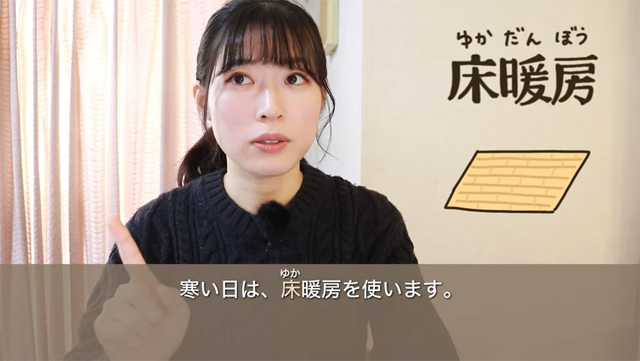
Naoko’s videos are calm, natural, and deliberately paced, making them ideal for learners transitioning from high-beginner into true intermediate listening. Topics focus heavily on daily life in Japan, personal routines, and lived experiences—exactly the kind of language learners encounter first in real interactions.
The consistent speaking style and Japanese subtitles allow learners to relax while listening, making this an excellent starting point for regular listening practice without fatigue.
Best used for: entry-level N3 learners building comfort with natural spoken Japanese.
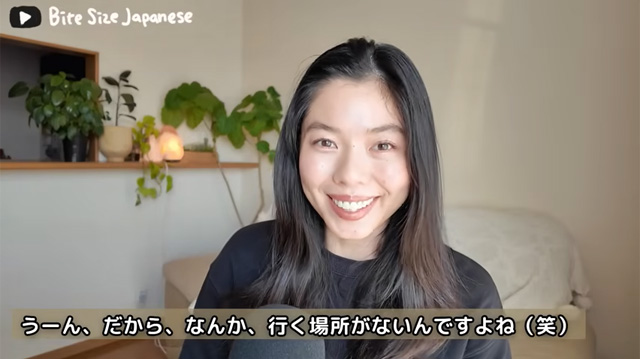
Bite Size Japanese excels at structure. Videos are clearly labeled by level, topic, and difficulty, and often include subtitles, furigana, and visual support. Episodes are short, focused, and easy to fit into daily life.
Compared to Naoko’s more free-flowing style, Bite Size Japanese is slightly more instructional and compact, making it ideal for learners who like clarity and organization.
Best used for: consistent daily practice with clearly scoped difficulty and strong visual support.
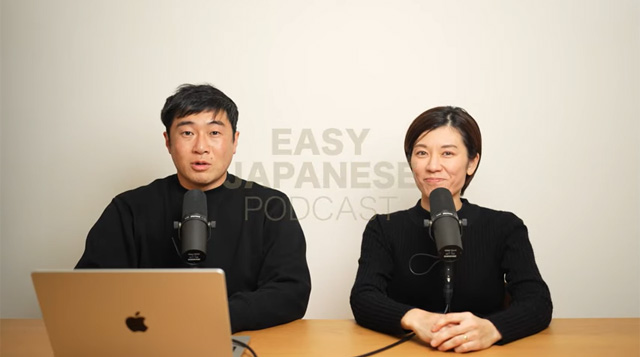
This podcast is an excellent daily anchor for N3 learners. Conversations feel friendly and natural, but pronunciation is clear and learner-aware. Topics stay grounded in everyday life, making it highly practical.
Compared to Bite Size Japanese, this resource is slightly less structured and more conversational. Compared to Moshi Moshi Japanese, it is less instructional and more natural. However, video lengths are perfect for sustainable, daily listening practice, along with YouTube captions allow learners to confirm comprehension without turning the experience into pure study.
Best used for: steady daily listening that feels natural but manageable.
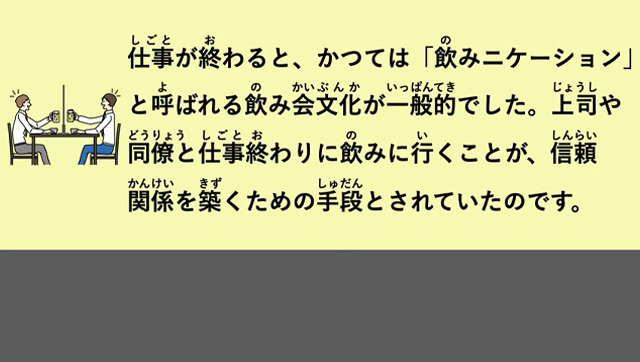
Moshi Moshi Japanese blends storytelling with explanation. Rico Sensei speaks clearly, but content often includes cultural context, humor, and explicit teaching moments, which makes it slightly more instructional than Easy Japanese Podcast.
Because subtitles and transcripts are built directly into the videos, this resource is ideal for learners who want clarity while still listening to engaging content.
Best used for: learners who want listening practice with explicit explanations and structure.

Nihongo for You occupies a unique space: the delivery is slow and careful, but the vocabulary and explanations are more advanced. This combination allows learners to process higher-level language without being overwhelmed by speed.
Compared to Moshi Moshi Japanese, Akari’s content is less story-driven and more vocabulary-focused. Compared to Sayuri or Haru, the pacing is gentler, making it ideal for learners who want to push vocabulary without sacrificing comprehension.
Best used for: vocabulary expansion while maintaining listening clarity.
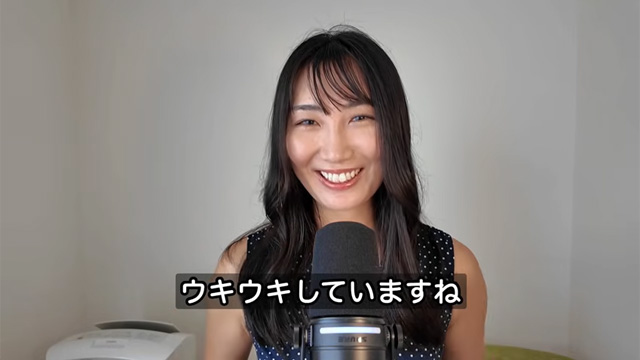
Sayuri’s videos feel closer to how Japanese is spoken among peers, but she remains aware of her learner audience. Speech is more natural and less controlled than earlier resources, while still offering Japanese subtitles.
This makes Sayuri Saying an excellent transition point between “learner-friendly” content and more native-like speech.
Best used for: learners ready to stretch toward upper-intermediate listening.
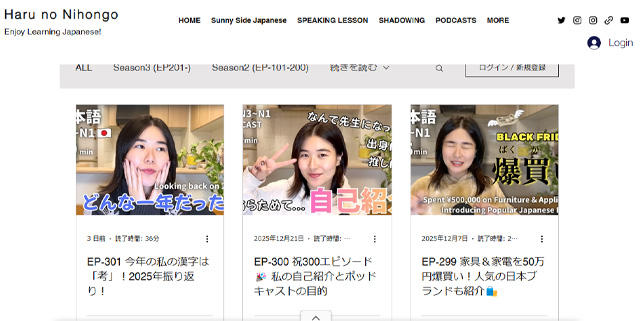
Haru’s podcast emphasizes lived experience, personal stories, and cultural reflection. Speech is natural, topics are deeper, and full transcripts are provided, making it an excellent bridge between structured learning content and real Japanese conversation.
Compared to Sayuri, Haru’s content is often longer and more reflective. Compared to Nihongo con Teppei, it offers much more support through transcripts.
Best used for: deeper cultural understanding and sustained listening practice with support.
Each of these resources serves a different function. Some help you transition from high-beginner to intermediate, some provide a solid intermediate foundation in Japanese listening ability, some expand vocabulary, and others train your ear for more natural speech to prepare you for the advanced level. The key is intentional combination of resources and consistency.
Most learners progress fastest when they anchor their routine with one comfortable, repeatable resource, and layer in one or two slightly harder resources to stretch comprehension gradually.
Used this way, listening stops feeling chaotic—and starts feeling like steady progress.
If you’d like to explore additional intermediate listening recommendations, curated lists from sites such as Tofugu and StoryLearning offer excellent supplementary ideas. These can be useful once you’ve established a stable core routine using the resources above.
★Also try reading:
The History of Kanji and the Fundamentals of Kanji Learning

At the JLPT N3 level, what you listen to matters—but how you listen matters even more. Many learners spend hours listening every week and still feel stuck, not because they lack exposure, but because their listening practice is unfocused or inefficient.
Effective listening at this stage requires intention, balance, and restraint.
This is a misconception too many people have; Listening does not work by “osmosis.” Simply having Japanese playing in the background does not meaningfully improve listening ability. To make progress, you need to be engaged enough to follow the topic and the general flow of the conversation, even if many details are unclear.
Transcripts are powerful tools, but only when used strategically. Think of a transcript as an answer key, not a safety net.
Start by listening without any text. Replay the audio multiple times and see how much your understanding improves naturally. Only when replaying no longer deepens comprehension—or when you genuinely cannot figure out what is being said—should you check the transcript.
Relying on transcripts too early turns listening practice into reading practice, and your ears never fully adapt.
At the N3 level, not every session is meant to feel clear or satisfying. There will be times where you understand most of it, other times where you have hardly any idea what’s going on. It’s ok, don’t worry, nothing is wrong with you; this is completely normal. Don’t fret and lose confidence when you don’t understand, and don’t get overconfident if there is a podcast or video you mostly understand. Welcome the discomfort of the countless listening sessions that feel “unsuccessful”, and know that underneath all of your effort, you are slowly but surely building a strong foundation for conversational Japanese.
Effective learners balance two types of listening.
With harder material, spend more time on less content: replay sections, take selective notes, and analyze what is difficult. With easier material, do the opposite: listen for longer stretches, take minimal notes, and focus on overall flow rather than individual words.
Both approaches are necessary. Too much deep analysis slows momentum; too much easy listening stalls progress.
When listening, focus first on what stands out. Pay attention to expressions, sentence endings, or phrases you keep hearing again and again. Learn those obvious, recurring elements first.
Listening comprehension develops in layers. Like sanding wood, you smooth the surface over multiple passes, using different levels of pressure each time. Trying to understand everything at once only creates overwhelm. As Oku Sensei says, “Don’t worry if you only catch 60%. Over time, that 60% becomes 80%, then 95%. The key is to keep listening every day.”
Repetition is essential, but fatigued listening is not effective listening. If you’ve replayed audio several times and feel it’s going in one ear and out the other because you can’t concentrate, stop.
Switch resources, take a break, or return later. Progress comes from focused exposure—not forcing yourself through exhaustion.
Used this way, listening practice becomes efficient, sustainable, and—most importantly—effective.
★Also try reading:
The Best Way to Learn Japanese Online: A Comprehensive Guide Introduction

Subtitles and transcripts are helpful tools, but many learners lean on them too early and too often. When this happens, the brain stops listening and starts reading instead. Over time, students may feel they “understand” content, yet struggle the moment subtitles are removed.
Oku Sensei recommends using subtitles strategically: listen first without text, and only use transcripts later to confirm understanding. Your ears need time to adjust. If you always give them visual support immediately, they never fully develop.
Another common mistake is jumping straight into Netflix dramas, anime, or fast-paced YouTube videos that are far beyond one’s current level. While this content may be motivating at first, it often leads to frustration, self-doubt, and eventual burnout.
Listening should feel challenging but not hopeless. If you understand almost nothing, your brain has nothing to build on. Oku Sensei often reminds students that progress comes from material that is slightly uncomfortable—not completely overwhelming.
Many learners listen to something a single time and then move on, assuming repetition is unnecessary. In reality, listening improves through repeated exposure. The first listen builds familiarity, the second strengthens recognition, and later listens deepen understanding.
Oku Sensei encourages students to replay the same audio multiple times, especially at the N3 level. Hearing the same expressions again and again is what trains your brain to recognize them automatically.
This is one of the most common mistakes students make, and comes to bite them in the back later on. Listening is often treated as optional—something to do only if there’s extra time after grammar or vocabulary study. I cannot stress this enough; This mindset slows progress dramatically. Listening is not a supplement; it is a core skill. I myself have made this mistake in my own journey of learning Japanese, and it cost me dearly.
Students who improve fastest are those who make listening a regular part of their routine, even in small amounts. Consistency matters far more than length.
A strong JLPT N3 routine combines (1) a core resource you repeat, (2) topic variety, and (3) two listening modes:
Flow listening (comfort + rhythm) and Intensive listening (deep accuracy with transcripts).
Below are three sample weekly patterns. When creating your own schedule, use these patterns as a reference ,and adjust the specifics of the schedule as needed. The most important thing is that the schedule you create is sustainable, enjoyable, and fits your needs.
|
Core (most days) |
Flow |
Intensive (deep work) |
Weekly time |
|
10 min × 4 days |
15 min × 1 day |
20 min × 1 day |
~75 min/week |
|
Core (most days) |
Flow |
Intensive (deep work) |
Weekly time |
|
10–15 min × 5 days |
15–20 min × 1 day |
30 min × 1 day |
~105–125 min/week |
|
Core (most days) |
Flow |
Intensive (deep work) |
Weekly time |
|
15 min × 5 days |
20 min × 2 days |
30 min × 2 days |
~215 min/week |
★Also try reading:
How Long Does It Take to Learn Japanese? Tips for Faster Mastery

I know what it feels like. EXACTLY, what it feels like. Trust me. You sit down on your desk, open up your laptop and the intermediate listening textbook you bought a few months ago, and sit there, listening to exam questions over, and over, and over again. Grueling. Tiring. Over time, you start to get slightly better, start answering more of the practice exam questions correctly. But for some reason, you couldn’t understand even a simple sentence your Japanese friend said to you the other day.
Again and again; another word you don't know, another expression you've never heard of. An endless sea, one after the other of unknown words and phrases hitting you like little waves, each one eroding away your confidence slowly. "Maybe I'm just not good at listening". "Maybe this is just my weak point". "Maybe I'm just not cut out for this".
I'm begging you; wait, and don't lose hope. It's a long tunnel, a long road ahead of you, I won't lie. But hold onto that little spec of light you can see at the end. Hold onto it, and keep going. Because one day, after walking until you truly thought there would be no end to your walking, you will reach it; the light at the end of the tunnel.
Especially listening ability, it takes YEARS to build it up. It cannot be rushed. It cannot be forced or crammed. And most of all, it is by far the hardest skill to feel tangible progress on. But once it comes together, it becomes your strongest skill. Because to truly listen is not just to hear words—it is to understand another person’s viewpoint, their culture, their emotions, and the way they see the world. Listening is where language stops being a subject, and starts becoming human.
I don’t want you to forget this: you’re not alone. And we’re here for you. At Oku Sensei’s Japanese, we guide students through this exact N3 intermediate wall—not with shortcuts, but with structure, patience, and understanding.
Your dream is closer than it feels. Don’t let this one phase steal it from you.