- Learning Japanese
- Japanese Culture
2026.02.26


Japan is often presented as a modern, independent democracy—economically advanced, politically stable, and firmly in control of its own destiny. On the surface, this image appears true. Yet beneath that surface, the influence of the United States continues to quietly shape Japan’s politics, economy, and national security in ways that many outside the country rarely notice.
This influence did not emerge by chance. It was forged in the aftermath of World War II, during the U.S.-led Occupation of Japan. What began as a project of reconstruction and protection gradually evolved into a long-term, asymmetric alliance—one in which Japan gained stability and prosperity, but at the cost of full autonomy in key national decisions.
To see Japan clearly today, we must listen not only to official narratives, but to the voices of its people—citizens who have endured decades of silent sacrifice, or 我慢 (gaman). Their experiences reveal how U.S. strategic priorities have repeatedly shaped Tokyo’s choices, often without meaningful public consent.
To truly understand modern Japan, we must go beyond language learning alone and examine the values, structures, and historical forces that operate beneath everyday life.
That is why, at Oku Sensei’s Japanese (OSJ), we believe Americans—and global learners alike—have the right to understand these deeper realities.
Japan’s postwar political foundation was laid under the direct supervision of the United States during the Occupation period. The new constitution, drafted under U.S. guidance, reshaped the nation’s identity—most notably through Article 9, which renounced war and prohibited Japan from maintaining traditional military forces. While this pacifist clause became a symbol of Japan’s postwar ideals, it also embedded long-term reliance on U.S. military protection.
During this period, Japan’s wartime militarist leadership was purged. At the same time, leftist and communist movements were suppressed as Cold War tensions intensified. The result was the construction of a political and economic system aligned closely with U.S. interests—one that prioritized stability, anti-communism, and cooperation with Washington.
With the signing of the San Francisco Peace Treaty, Japan formally regained its independence. However, this sovereignty came with conditions. The accompanying U.S.–Japan Security Treaty permitted continued American military presence on Japanese soil, effectively binding Japan’s defense policy to U.S. strategic needs.
Public unease surfaced dramatically in 1960 during the Anpo Protests, when millions of citizens took to the streets to oppose the revised security treaty. Protesters feared that Japan’s sovereignty was being traded for protection—that the nation was becoming permanently subordinate under the guise of alliance.
These early protests revealed a truth that remains relevant today: resistance to external control was present from the beginning. Even as Japan rebuilt and prospered, many citizens sensed that something fundamental—true self-determination and self-governance—had been quietly deferred.

U.S. assistance and access to American markets played a major role in fueling Japan’s postwar “economic miracle.” Yet this prosperity did not develop in a vacuum. From trade rules to monetary policy, Washington repeatedly shaped the boundaries within which Japan’s economy could grow.
A defining moment came in 1985 with the Plaza Accord, when U.S. pressure forced a sharp revaluation of the yen. The stronger currency was intended to correct trade imbalances, but it also eroded Japan’s export competitiveness and contributed to asset bubbles whose collapse ushered in decades of economic stagnation. While the agreement was framed as international cooperation, its long-term costs were borne largely by Japan.
Agricultural trade disputes further reveal this imbalance. American trade policy continues to protect U.S. rice producers through tariffs and subsidies, while Japan has been pushed to open its agricultural markets. The result has been the steady decline of Japanese farming communities, as small-scale farmers struggle to survive in a system tilted against them.
Japan’s financial relationship with the United States adds another layer of constraint. As one of the largest holders of U.S. Treasury bonds, Japan helps stabilize the American financial system. Yet this position also functions as a trap: selling these assets too aggressively would risk market disruption and strain the alliance. Economic interdependence thus limits Japan’s freedom of action.
Ordinary citizens experience the consequences directly. Living costs rise, rural livelihoods disappear, and economic insecurity deepens—while policy choices remain tightly bound to external expectations.
Analysis: The United States secures markets, financing, and monetary leverage. Japan prospers—but only within boundaries that Washington allows.
★Also try reading:What Kind of People Are Maiko in Japan? Explaining the Differences from Geiko and the Traditional Ozashiki-asobi
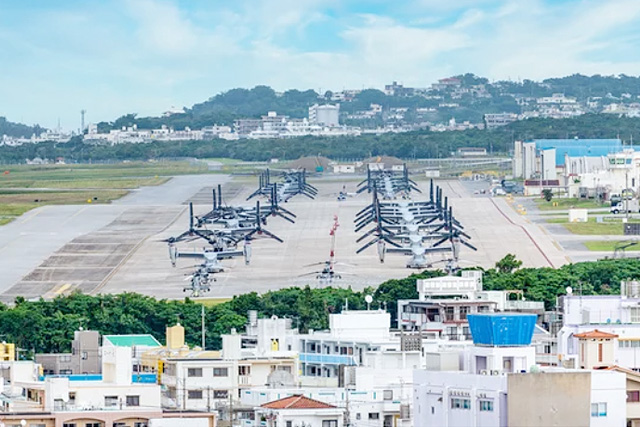
Nowhere is the imbalance of the U.S.–Japan alliance more visible than in Okinawa. Although the prefecture accounts for just 0.6% of Japan’s land area, it hosts approximately 74% of all U.S. military base land in the country.
For local residents, this concentration carries daily costs. Aircraft noise, accidents, and environmental damage disrupt ordinary life. High-profile crimes involving U.S. service members have repeatedly reignited public anger, reinforcing a sense that Okinawa bears burdens the rest of Japan does not.
Resistance has been persistent and deeply rooted. Following the 1995 rape of a local schoolgirl by U.S. servicemen, massive protests erupted across the prefecture. In 2019, a prefectural referendum showed 72% opposition to the relocation of the Futenma base to Henoko. Sit-ins, human chains, and daily demonstrations continue, year after year.
Local voices capture the depth of frustration: “Okinawa is like America’s colony.”
「もう我慢ならない」— “We can’t take it anymore.”
From Tokyo’s standpoint, the bases are described as strategically “necessary,” particularly in light of regional tensions involving China and North Korea. The controversial Henoko relocation has been justified as “the only solution,” even in the face of overwhelming local opposition. The “Henoko relocation” refers to the Japanese government’s plan to move the U.S. Marine Corps Air Station Futenma from a densely populated area in Ginowan to a new base at Henoko, a coastal area of northern Okinawa.
This reveals a fundamental gap: local democracy versus national security priorities. Decisions affecting Okinawa are framed as unavoidable realities of alliance management, while the will of residents is repeatedly overridden.
Analysis: Japan’s leaders align with Washington because the U.S. alliance guarantees international standing and security—but this alignment often comes at the cost of ignoring the very citizens they are meant to serve.
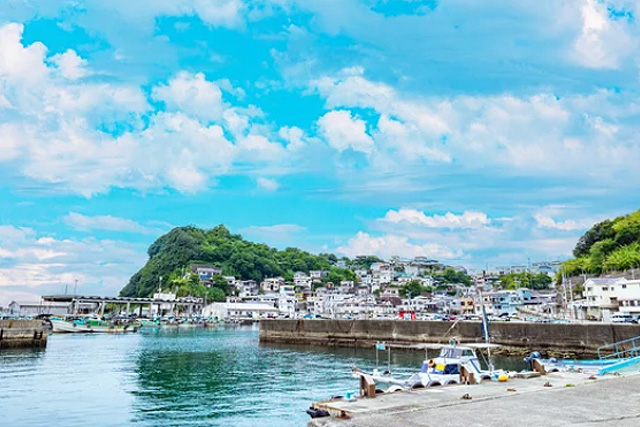
For Fukushima’s fishermen, the disaster did not end in 2011.
For more than a decade, they lived with suspicion that followed their catch wherever it went—markets that refused it, consumers who hesitated, and livelihoods that survived only through patience and restraint. Many continued fishing under strict testing regimes, carefully rebuilding trust one haul at a time. Their endurance was not loud. It was quiet.
Then came the decision to release treated radioactive water from the damaged nuclear plant into the sea.
To many outside Japan, this sounded technical—filtered water, international standards, safety thresholds. But for the fishermen, it struck at something far more fragile than numbers: the trust they had spent ten years trying to restore.
In 2015, TEPCO had made them a promise: no disposal would proceed without the understanding of those whose livelihoods depended on the sea. That promise mattered because it was all they had left. When the discharge went ahead despite their objections, the message they received was simple and devastating—your consent is optional.
Local protests followed, not with slogans about geopolitics, but with pleas born of lived fear:
“Don’t pollute the sea any further.”
Not because the ocean was already “ruined,” but because even the perception of contamination can destroy a fishing community overnight.
Behind the scenes, Japan’s government leaned heavily on international endorsement to justify the move—pointing to safety reviews and public support from close allies. This global approval mattered politically. It allowed Tokyo to present the discharge as responsible, scientific, and unavoidable, even as local trust collapsed. The needs of fishermen were weighed against Japan’s standing abroad—and found easier to absorb.
Once again, endurance of Japan’s citizens became policy. The fishermen were expected to wait, to accept, to endure—for the sake of national credibility and alliance stability. Their suffering was not denied; it was simply deemed as manageable.
★Also try reading:11 Essential Books to Understand Japanese History – A Guide for Western Readers
Across Okinawa and Fukushima, a pattern emerges—not only in what happened, but in how it was justified.
In Fukushima, many fishermen said in effect: “We can’t accept this. It betrays us.” They were promised consent would matter—and then learned it didn’t.
In Okinawa, the message has been even more direct: 「もう我慢ならない」— “We can’t take it anymore.” A prefecture that makes up just a fraction of Japan’s land is still asked to carry a disproportionate share of the military burden, even when local opposition is sustained and visible.
Yet the government’s language remains consistent: pragmatic, realistic, unavoidable. Decisions are framed as the price of stability—of decommissioning, deterrence, or diplomacy. The citizen experience is different. What officials describe as “necessary tradeoffs,” many communities experience as sacrifices demanded for other people’s gain.
And this gap is not abstract; It shows up in everyday life. When the yen weakens and import costs rise, ordinary households feel it first—through food, fuel, and daily essentials. This decline is often described as a natural market movement, but in reality it reflects a widening gap between U.S. and Japanese monetary policy: the United States raised interest rates aggressively, strengthening the dollar, while Japan—constrained by its debt structure, its large holdings of U.S. Treasury bonds, and its role within a U.S.-centered financial system—could not follow without risking economic instability and diplomatic strain.
Rural communities don’t just “decline”—they lose livelihoods, young people leave, and local identity frays. Trade liberalization shaped under U.S.-led global rules favors scale and exports, not small domestic producers. The economic system keeps moving—but it moves in directions local communities cannot follow.
Okinawan residents live with the physical and psychological weight of bases—noise, risk, and the sense that democratic choice stops where alliance logistics begin.
What unites these threads is the quiet expectation that certain people will simply endure. That endurance—我慢—becomes the invisible glue holding the system together. It prevents rupture. It absorbs contradiction. It keeps the nation functioning while resentment accumulates.
This leads to the question your article is building toward:
Is Japan’s government serving its people—
or serving U.S.-linked strategic demands that define what Tokyo is allowed to choose?
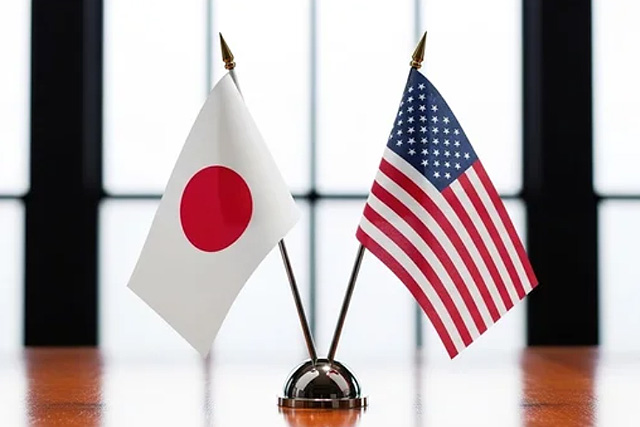
Japan is no longer under formal occupation. Its constitution stands, elections are held, and its leaders act with legal sovereignty. Yet the influence forged in the postwar era still binds policy choices today—not through force, but through structure.
In military affairs, this influence appears in the ongoing debate over Article 9 and the continued presence of U.S. bases. Japan’s pacifist framework, once embraced as a moral reset after war, also embedded long-term reliance on American security guarantees. Revising that framework now is politically divisive, diplomatically sensitive, and constrained by regional realities shaped in coordination with Washington.
In economic policy, the constraints are quieter but just as real. Japan’s export-led growth, currency management, and accumulation of U.S. Treasury bonds were once rational strategies—designed to stabilize the yen, support industry, and secure prosperity within a dollar-centered global system. Over time, those same strategies narrowed Japan’s options. Debt structure, financial interdependence, and alliance expectations limit how freely Tokyo can respond to currency weakness, inflation, or external shocks.
Diplomatically, alignment with the United States has provided predictability and protection, particularly amid tensions with China and North Korea. But alignment also carries expectations—about posture, priorities, and what kinds of disagreement are tolerable. Acting entirely independently is possible in theory, yet costly in practice.
Many Japanese accept this alliance as a practical reality. It has delivered stability, growth, and international standing. But resentment grows when the burdens of that stability fall repeatedly on the same communities—when Okinawa bears the weight of security, Fukushima absorbs environmental risk, and rural regions quietly absorb economic decline.
What has changed in recent years is not the existence of these quiet strings, but the growing recognition of their cost. Across the country, more citizens are asking whether a democracy can remain healthy when certain voices are consistently overridden in the name of necessity.
Ignoring Okinawa or Fukushima is no longer just a regional issue. It undermines trust in the system itself.
★Also try reading:Deepen Your Understanding of Japanese Culture and Traditions! A Detailed Guide to 12 Iconic Traditions

The U.S.–Japan alliance has undeniably provided stability. It helped rebuild a defeated nation, anchored it within a global order, and supported decades of peace and prosperity. But that stability came at a price: sovereignty that was never fully completed, only managed.
From Okinawa to Fukushima, citizens’ voices show that endurance has limits. The quiet expectation that people will continue to absorb risk, sacrifice, and contradiction without meaningful consent is no longer holding as it once did.
The question facing Japan today is not whether to abandon the alliance, but whether it can reshape it—moving from a relationship built on silent accommodation toward one grounded in democratic agency and shared responsibility.
But this is not Japan’s question alone.
The quiet strings that bind Tokyo were woven into a broader postwar order designed, led, and largely benefited from by the United States and its allies. If that order now produces uneven burdens and silent suffering, responsibility does not rest solely with those asked to endure it.
The quiet strings may remain. But whether Japan continues to move only within boundaries set decades ago—or begins to write a fuller score of its own—also depends on whether Americans and other Western citizens are willing to listen, to question the systems that act in their name, and to recognize the human costs carried elsewhere for their security and stability.
Democratic agency does not stop at national borders. If alliances are to remain legitimate, they must be examined and reshaped by all who sustain them.
Learning history and understanding social structures is the first step toward genuine agency.
At Oku Sensei’s Japanese, we believe language study is inseparable from this deeper awareness. Our learning environment invites students to explore not only how Japanese is spoken, but how modern Japan was shaped—and how it continues to shape itself.
If you’re interested, we invite you to take advantage of our free consultation.