
- Learning Japanese
- Japanese Culture
2025.12.28


There are probably many people who are thinking, ‘I want to know more in detail about the Sengoku period, which is popular in dramas and games.’
This time, we will introduce from when to when the Sengoku period was, and the trends and culture of the Sengoku period, as well as the famous battles of the Sengoku period.
In addition, we will also explain six selected Sengoku warlords who were active in the Sengoku period, so please use it as a reference.
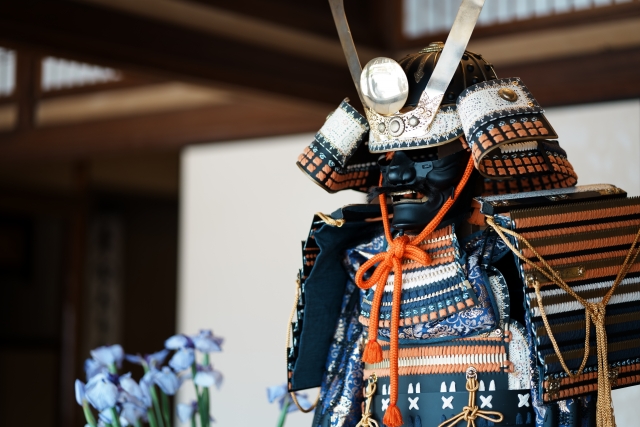
The prevailing view is that the Sengoku period lasted for about 150 years, from 1467 to 1615.
There are also other theories that place the end of the Sengoku period at 1568 (Oda Nobunaga’s entry into Kyoto), or 1573 (the fall of the Muromachi shogunate), and from there until the Edo period is considered as the Azuchi–Momoyama period.
However, since the fact does not change that the Azuchi–Momoyama period was also an age of warfare, here, we will treat 1467 to 1615 as the Sengoku period, and will explain in detail the events that occurred at the beginning and at the end of the Sengoku period.
The Sengoku period began when the power of the Muromachi shogunate declined due to the internal war called the ‘Ōnin War,’ which continued from 1467 to 1477.
The Ōnin War was an internal conflict that occurred because of a dispute over whether Yoshihisa, the son of Ashikaga Yoshimasa, the 8th shogun of the Muromachi shogunate, or Yoshimi, his younger brother who had originally been taken in as an adopted son, would become the successor.
Since the powerful shugo daimyō of the time were also drawn into the conflict, both the Muromachi shogunate and the shugo daimyō lost their power because of this internal war, and local powers came to gain strength.
Because of this, it is said that the Sengoku period opened as an age in which those below overthrew those above by force and seized real power.
The Sengoku period, which continued for about 150 years, is considered to have completely ended when the Tokugawa shogunate system became solidified by the ‘Summer Siege of Osaka’ in 1615.
The Summer Siege of Osaka was the battle in which Tokugawa Ieyasu and Toyotomi Hideyori fought, and Tokugawa Ieyasu’s victory led to the destruction of the Toyotomi clan.
The conflicts among the Sengoku daimyō throughout the country had already ceased to be seen at the point when Toyotomi Hideyoshi achieved practical unification of the realm.
With the Toyotomi clan being destroyed in the Siege of Osaka, there remained no forces capable of opposing the Tokugawa clan,
and the age of warfare ended, and the governing system of the Tokugawa shogunate was completed.
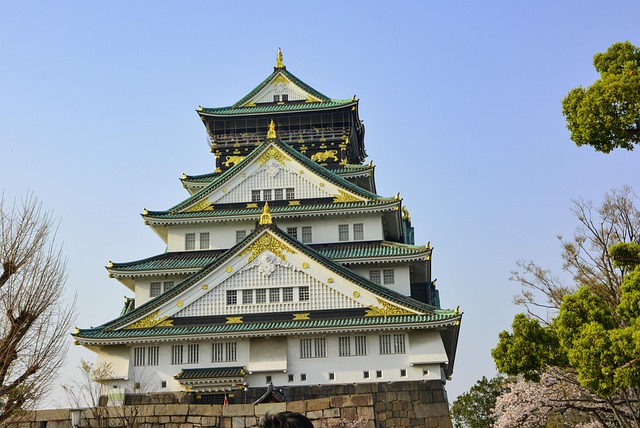
The trends and culture of the Sengoku period include the following.
|
Gekokujō(下剋上) |
The act in which people of low status overthrow those of high status and seize real political power. The tendency for low-ranking local warriors or courtiers to oppose the various shugo daimyō across the land became common. |
|
Castle towns(城下町) |
Cities created as defensive bases to prevent enemy intrusion, where the residences and government offices were placed at the foot of the daimyō’s castle, which was built at the top of a mountain. |
|
Domain laws (分国法) |
Unique laws established by Sengoku daimyō when they governed their domains. For example, in the “Shingen Family Law,” established by Takeda Shingen, there was a rule such as “Kenka ryōseibai”, meaning that both parties involved in a dispute within the territory would be expelled. |
|
Arrival of firearms(鉄砲伝来) |
In 1543, firearms were introduced to Tanegashima, and as they spread throughout Japan, they brought significant changes to the tactics and warfare of the Sengoku period. |
|
Tea ceremony(茶道) |
Oda Nobunaga popularized the tea ceremony and created a custom of giving tea utensils as rewards. In addition, the manners of tea ceremony and the tea utensils one possessed were used as ways to demonstrate the education and status of samurai. |
The above trends and culture can be said to be unique to the Sengoku period, when various daimyō were divided and competed for power throughout the country.
★Also try reading:
An Introduction to Japanese Tea Ceremony for Western Audiences: Learn Basic Etiquette for Beginners!
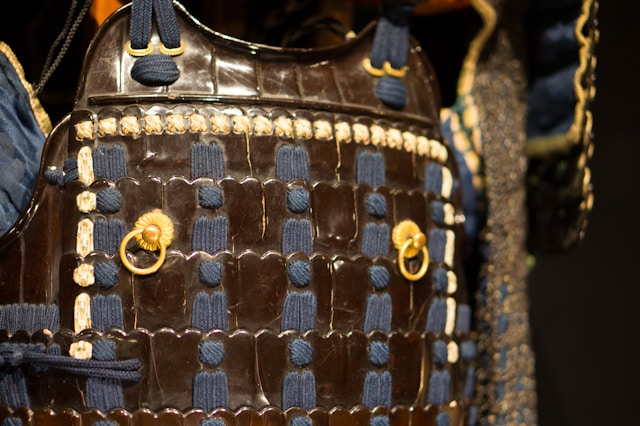
There are three famous battles of the Sengoku period.
Here, we will explain the above three battles of the Sengoku period.
The Battle of Kawanakajima refers to the five battles fought between Takeda Shingen and Uesugi Kenshin from 1553 to 1564, over the control of northern Shinano.
The fourth battle became a fierce battle in which both armies suffered many casualties, and it is said that in the end Uesugi Kenshin charged forward and engaged in a one-on-one fight with Takeda Shingen.
Meanwhile, the fifth battle ended with the withdrawal of both armies, and neither side was able to achieve a decisive victory.
However, the Battle of Kawanakajima remains in history as a battle between two great generals, and it is said that if either side had won, it would have become a major threat to Oda Nobunaga.
The Battle of Okehazama was a major battle that occurred in 1560, in which Oda Nobunaga, with 4,000 soldiers, challenged Imagawa Yoshimoto’s army of 25,000 soldiers and achieved victory.
Imagawa Yoshimoto ruled three provinces, while Oda Nobunaga ruled only one, making the difference in military strength overwhelming.
Many daimyō also defected to Imagawa Yoshimoto’s side, creating a very disadvantageous situation for Oda Nobunaga.
However, Nobunaga achieved victory through “false letters and information manipulation by spies” and “the dispersal of the enemy forces”, demonstrating his brilliant strategy.
The Battle of Sekigahara was a battle that occurred in 1600.
The warlords of the entire country split into the Eastern Army led by Tokugawa Ieyasu and the Western Army led by Ishida Mitsunari, and because it was a massive battle that determined the ruler of Japan, it is called “the Battle that Divided the Realm.”
The Western Army led by Ishida Mitsunari had greater numbers, but many daimyō in the Western Army had no intention of fighting because they knew Tokugawa Ieyasu’s capability, and many had already decided to betray him.
As a result, the Eastern Army’s all-out attack at Sekigahara allowed Tokugawa Ieyasu to achieve victory in just six hours.
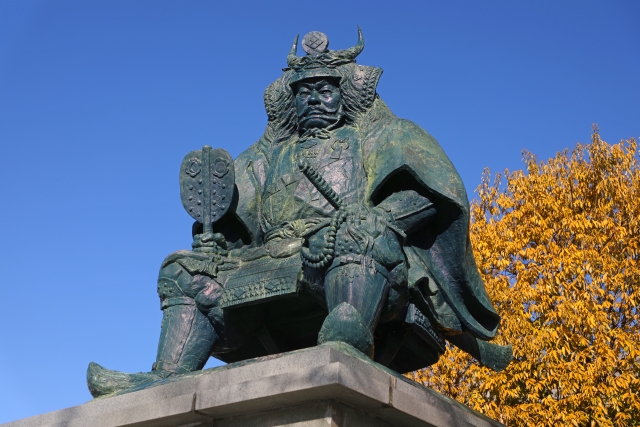
The six notable warlords who were active in the Sengoku period are as follows:
Here, we will explain what kind of figures these six individuals were during the Sengoku period.
Oda Nobunaga was the first warlord who attempted to achieve the unification of the realm, and he was a Sengoku warlord with innovative ideas.
After unifying the entire province of Owari, he strengthened his power by winning the Battle of Okehazama, then conquered neighboring provinces with Gifu Castle as his base while aiming for national unification, and destroyed the Muromachi shogunate.
Although he was close to unifying the entire country, he committed suicide due to the Honnōji Incident, caused by his retainer Akechi Mitsuhide.
However, Nobunaga incorporated firearms early as a main force, transforming the nature of warfare, and reformed society through policies such as Rakuichi-Rakuza, making him a warlord who greatly influenced the Sengoku period with his innovative ideas.
Toyotomi Hideyoshi was born as a peasant but achieved numerous military accomplishments and succeeded Oda Nobunaga to complete the unification of Japan, making him the most successful figure of the Sengoku period.
He served Oda Nobunaga, distinguished himself in many battles, defeated Akechi Mitsuhide who had betrayed Nobunaga, and achieved national unification by destroying the Hōjō clan in 1590.
Tokugawa Ieyasu was the warlord who ended the long Sengoku period and became the first shogun of the Edo shogunate, which lasted about 260 years.
During his childhood, he lived as a hostage under the Imagawa and Oda clans, but he was freed as a result of the Battle of Okehazama.
In 1600, he defeated Ishida Mitsunari at the Battle of Sekigahara, was appointed Sei-i Taishōgun, and established the Edo shogunate in Tokyo.
Hōjō Sōun was a warlord known as “the first Sengoku daimyō,” who rose from being a bureaucrat serving the Muromachi shogunate to becoming a powerful daimyō—an act of gekokujō (overthrowing superiors).
He was also an excellent administrator.
Under the principle of “Shikō Rokumin” (four parts tax, six parts for farmers), he implemented policies allowing farmers to retain 60% of their harvest, and he prevented officials from committing fraud in tax collection, thereby creating a prosperous domain.
He also created clear administrative rules such as the “Twenty-One Articles of Sōunji-dono”, which summarized matters from lifestyle practices to personal appearance.
These policies became the foundation for about 100 years of prosperity for the Hōjō clan and are considered a precursor to domain laws (Bunkokuhō).
Uesugi Kenshin was a Sengoku warlord who governed the Hokuriku region and unified Echigo Province.
He was known by the nickname “the God of War”, and is often called the strongest warlord of the Sengoku period.
He was a sincere man who valued justice.
Even in the Sengoku period, with its strong trend of gekokujō, he was a warlord who “did not wage wars without just cause” and “did not fight for the purpose of invasion.”
Unlike many other warlords, he did not engage in deception.
Despite engaging in 70 battles, it is said that he lost only twice.
Takeda Shingen was a Sengoku warlord who led the invincible Takeda army, known as “the Tiger of Kai.”
Under the banner of “Fūrin Kazan”, he shrewdly sought territorial expansion, and many Sengoku daimyō—including Oda Nobunaga—greatly feared him.
His personality was cautious, and he is said to have gone to war only when he was certain of victory, based on intelligence gathered by his network of ninja spies.
In addition to his military prowess, he was also highly capable in politics, such as implementing legal reforms and developing land, and he is known as the figure who transformed Kai Province from poverty into a powerful domain.
★Also try reading:
What Were Ninja—Really? History, Tactics, and Hands-On Experiences
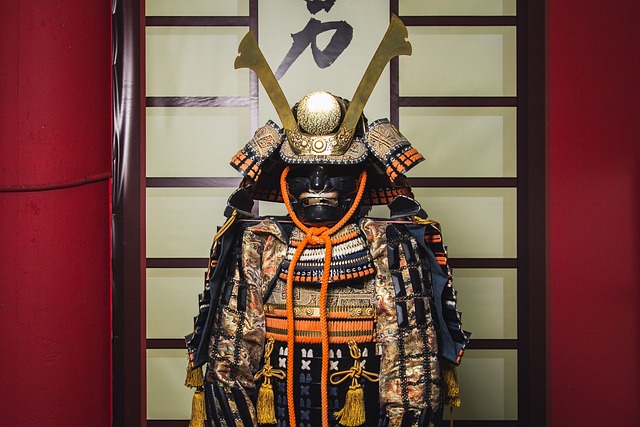
This time, we introduced from when to when the Sengoku period lasted, as well as the trends and culture of the Sengoku period and famous battles of the era.
If you are someone who thinks, “I am interested in Japanese history and culture, so I want to learn Japanese!”, why not take online lessons at Oku Sensei’s Japanese?
At Oku Sensei’s Japanese, Oku sensei, a teacher with over 20 years of teaching experience at universities across the United States, supports learners in acquiring practical Japanese reading, writing, and speaking skills, so even those who feel anxious thinking “Japanese seems difficult” can learn with ease.
Right now, Oku Sensei’s Japanese is offering a “30-minute free consultation,” so please check it out.