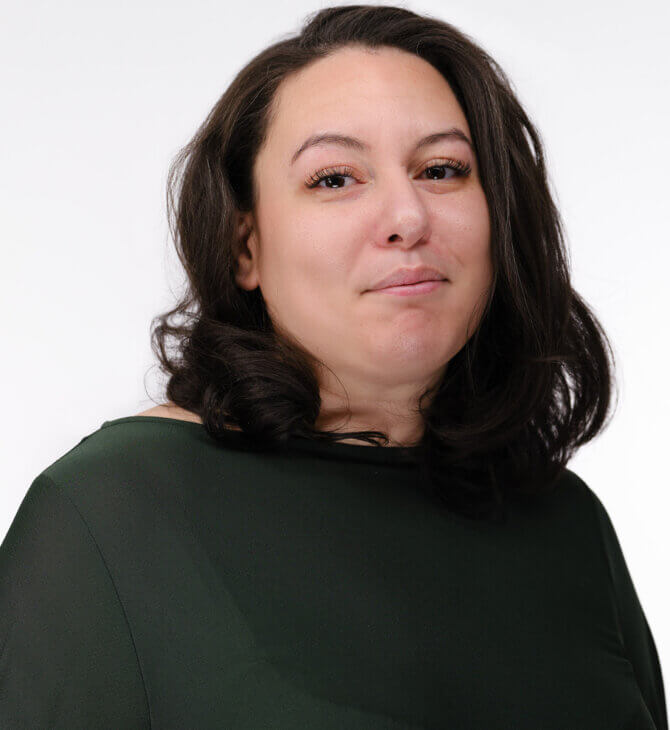
Oku Sensei’s support and clear explanations made it easy for me to acquire the grammar forms on a deeper level.
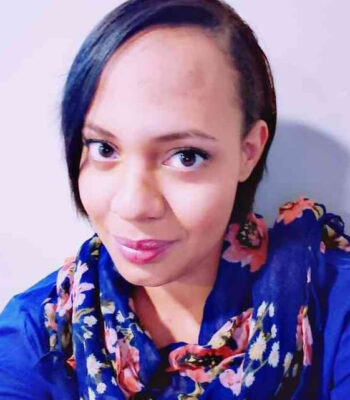
Alyse Lafferty
- First, could you tell us about yourself? (Your name, age, occupation, etc., as much as you are comfortable sharing)
- My name is Alyse Lafferty. I am 38 years old and an Assistant Language Teacher in Kochi, Japan.
- How long have you been taking classes at Oku Sensei’s Japanese?
- I have been taking classes with Oku Sensei since August of 2025.
- What was your situation before you started Oku Sensei's Japanese?
- I had been living in Japan for about 3 years and not progressing in my Japanese skills at a rate I would have liked before I started taking classes.
- What results were you expecting before signing up? And what results did you actually achieve?
- I wanted to be able to fill in the gaps of my acquisition and be able to communicate more effectively. I have been able to discover and address many things that I was missing from my linguistic framework and learn so much more outside of the scope of what general textbooks offer.
- Why do you think you were able to achieve the results mentioned in Q4?
- Oku Sensei’s support and clear explanations made it easy for me to parse through my current understanding and really acquire the grammar forms on a deeper level.
- What was the most memorable aspect of learning at Oku Sensei's Japanese?
- For me the context is such an important addition beyond learning grammar and lexicon. Having an explanation of why and when we use these forms rather than just how with clear examples and social context. As someone living in Japan it has been invaluable to my level of communication.
- Have you studied Japanese anywhere else? What differences did you notice compared to other Japanese language schools?
- I studied online with one-on-one tutors through AmazingTalker before joining Oku Sensei’s class. Those classes tended to strongly lean towards just trying to have conversations in Japanese or just reading a textbook together.
- Did you find the price to be expensive? (Did you feel that what you gained was worth more than what you paid?)
- I feel the price is appropriate for the learning experience.
- Who would you recommend Oku Sensei's Japanese to? On the other hand, if there is someone you wouldn't recommend it to, what kind of person would that be?
- I would recommend the class to someone looking for clear and contextual instruction or someone who likes to be able to ask questions to further their understanding.If someone prefers a conversation-heavy class focused primarily on speaking practice rather than on understanding the reasoning behind the grammar, a different format might be more appropriate.
- What content attracted you to sign up for Oku Sensei's Japanese? Did you have any hesitations when signing up?
- After taking courses with a few native speakers before, I was attracted to the fact that Oku Sensei has a Phd in Linguistics and therefore would be able to explain things to me in a more objective manner while still having native competency and understanding.
- If you hadn’t signed up for Oku Sensei's Japanese, what do you think your situation would be now? Also, when do you think is the best time to sign up?
- I had hit a bit of a roadblock before joining Oku Sensei’s class so I believe I would have stayed at the same level as before. I would sign up as soon as possible! I think I would be in a much better position in my Japanese ability if I had started my Japanese studies with Oku Sensei.
- As someone who has studied Japanese at Oku Sensei's Japanese, could you give a message to those who will start learning in the future?
- If you’re starting your studies, I would encourage you to focus on building a strong foundation and trying to truly understand the language rather than just memorizing it. Clear explanations and deeper insight into how Japanese works can make a big difference in your progress. Nuance and context are just as important as vocabulary and grammar rules, especially if you want to communicate more naturally and confidently. For me, this approach helped bridge the gap between knowing Japanese and actually using it effectively.