

- Learning Japanese
- Japanese Culture
2026.03.23


Many people studying Japanese find themselves thinking, “I’ve been studying Japanese, but I keep hitting a wall,” or “I want to learn Japanese that I can actually use when speaking with native speakers.” As a result, they often try a variety of different study methods.
Because Japanese is considered more difficult to master than many other languages, it is common for learners to try various study materials, encounter obstacles, and eventually feel confused about how to proceed.
In this article, we will introduce several tips to help you progress more smoothly in your Japanese studies, as well as recommended methods for developing practical Japanese skills.
We will also explain some of the common points where learners tend to struggle, so please feel free to use this information as a reference for your own studies.
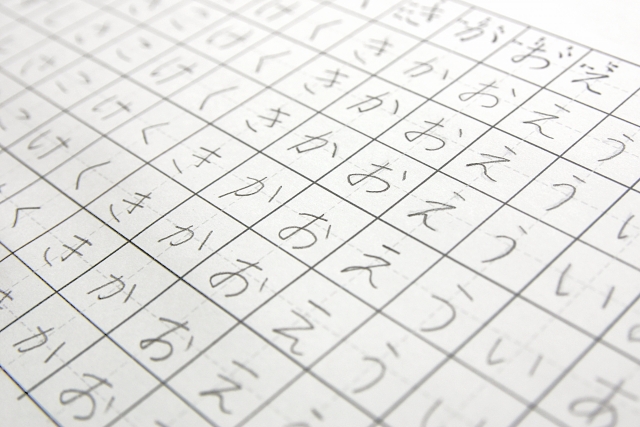
First, for those who are not yet familiar with Japanese, let’s look at three key characteristics that define the language.
|
Feature |
Explanation |
|
Writing Systems |
Japanese uses three types of characters: Hiragana, Katakana, and Kanji. |
|
Word Order |
Japanese typically follows an SOV (Subject–Object–Verb) sentence structure. |
|
Sound System |
Japanese has five vowel sounds: a, i, u, e, o. Most sounds are formed using a consonant + vowel combination. |
In addition to these characteristics, Japanese also has many unique features, such as the use of different speech levels—including polite language and honorific expressions—depending on the relationship between speakers.

There are six key tips that can help make your Japanese learning journey more effective:
In the following sections, we will explain each of these six tips in more detail.
When studying Japanese, it is important to assume that it may take three years or more to achieve a solid level of proficiency.
If you expect to master the language in just a few months or within a year, you may begin to feel rushed in your studies. When you eventually encounter difficulties—as all learners do—you may become discouraged and risk giving up.
In fact, even people who study Japanese for four years at university often find that they can only speak at a basic level. For those who want to learn Japanese as efficiently as possible, studying with a teacher who can provide proper instruction is often the best approach.
Another important point for making steady progress in Japanese is to find a learning method that you can enjoy and continue over the long term.
For example, learning through Japanese manga, movies, or dramas can be enjoyable. You may also benefit from having relaxed conversations with native speakers while practicing the language.
Choosing a method that you genuinely enjoy helps maintain motivation and allows you to grow while feeling a sense of accomplishment.
However, it is important to remember that relying only on manga, movies, or dramas is usually not enough to develop practical Japanese skills. Receiving proper instruction is also essential.
Setting clear goals can also help increase motivation. For example, goals such as “I want to enjoy traveling in Japan more” or “I want to make Japanese friends” can provide strong encouragement to continue learning.
Japanese is deeply connected to the country’s history, culture, customs, and society. For this reason, developing an interest in these areas is important for truly learning the language.
If history and cultural background are ignored, it can be difficult to acquire Japanese that can be used naturally in real-life situations.
Understanding Japanese history and culture not only helps with language acquisition but also allows you to connect more deeply with Japanese people and develop a greater appreciation for Japan itself.
One common mistake in Japanese learning is focusing only on memorizing sentence patterns. Learning patterns alone rarely leads to practical communication ability.
For example, simply memorizing a pattern such as “〜したらどうですか?” (“Why don’t you…?”) does not necessarily mean you understand when or how to use it in real conversations.
Memorizing patterns is not the same as being able to use Japanese correctly and naturally. To develop real communication skills, it is important to receive proper instruction and learn how these expressions are used in conversations with native speakers.
In addition to studying Japanese, it is also important to create opportunities to speak with native speakers.
When you actually try to communicate with native speakers, you may notice various challenges—for example, realizing that you are using unnatural expressions or finding it difficult to understand speech that is spoken quickly.
For those who want to improve their Japanese more smoothly, it can be especially beneficial to speak with native speakers who have formal training in Japanese language education.
When studying Japanese, learning kanji and grammar is certainly important. However, this alone is not enough to develop the ability to use the language in real situations.
To truly acquire a language, it is necessary to develop four skills in a balanced way: listening, reading, speaking, and writing.
For example, even if you understand grammar and vocabulary, you may struggle to follow conversations if you have not practiced listening to Japanese. Similarly, without speaking practice, it can be difficult to express your thoughts in Japanese. If you do not practice reading, you may find it difficult to understand things like signs, menus, or books in Japan. And without writing practice, it may be difficult to express your thoughts or feelings in Japanese when writing an email or letter to a friend.
To learn Japanese more smoothly, it is important to combine kanji and grammar study with balanced practice—listening to spoken Japanese, reading Japanese texts, speaking in real conversations, and writing sentences yourself.
By developing these four skills together, you can build Japanese ability that works in real communication situations.
★Also try reading:
What Excellent Japanese Speakers Know That Most Don’t: Top 8 Secrets

There are several points where learners often struggle when studying Japanese. The following five areas are particularly common:
Below, we will explain each of these common challenges in more detail.
Japanese uses more than 2,000 commonly used kanji characters, which can make reading and writing difficult for learners who are not familiar with Chinese characters.
In addition, a single kanji often has multiple readings, such as on’yomi (Chinese-derived readings) and kun’yomi (native Japanese readings). This can make kanji even more challenging to learn. Some characters may also have special readings when used in certain compounds, which is another point where many learners struggle.
It is often said that around 10,000 words are necessary to live comfortably in Japanese, and the sheer amount of vocabulary can feel overwhelming for some learners.
One reason for this is that Japanese includes not only words derived from traditional Japanese but also many terms that originated from Chinese, as well as words borrowed from other languages.
Because such a wide range of vocabulary is used, choosing an efficient learning method can play an important role in progressing smoothly.
Japanese honorific language generally falls into three main categories: sonkeigo (respectful language), kenjōgo (humble language), and teineigo (polite language). Learning how to use these correctly is not always easy.
The appropriate form depends on the relationship between speakers and the situation in which the conversation takes place, which is why many learners find keigo to be complex and challenging.
At the same time, using appropriate honorific expressions is an important part of building positive relationships in Japan, making it a valuable skill to learn.
Japanese often relies on indirect or ambiguous expressions rather than direct statements. This means that listeners are sometimes expected to understand the underlying meaning behind what is being said.
This tendency is closely connected to the Japanese cultural value of wa (harmony), which emphasizes consideration for others. Because of this, understanding ambiguous expressions often requires some knowledge of the cultural background behind the language.
Differences in grammatical structure are also a common point where Japanese learners struggle.
Japanese sentence structure and ways of expression differ significantly from those of many other languages, including English. For this reason, many learners find that simply understanding how Japanese grammar works can already be quite challenging. Even after gaining a solid understanding of grammar, many learners still find it difficult to construct sentences or use them naturally in conversation.
In addition, Japanese frequently omits the subject of a sentence, requiring the listener or reader to interpret meaning from context. Because of this, it is important not only to memorize vocabulary or sentence patterns but also to understand how they are used in real conversations and written communication.
Japanese also contains many unique expressions and ways of phrasing ideas that differ from those found in other languages. To use these expressions naturally, learners need not only grammatical knowledge but also experience with real communication.
★Also try reading:
Oku Sensei’s Guide to Japanese Grammar: The Essential Step-by-Step Roadmap for Japanese Learners

If you want to learn Japanese that you can actually use in real conversations, Oku Sensei’s Japanese online lessons are a great option.
Japanese can feel challenging because of its large vocabulary and the difficulty of kanji. However, at Oku Sensei’s Japanese, students learn through natural conversations and stories based on linguistic principles, allowing them to understand the language more smoothly and intuitively.
The program also includes education about Japanese culture, customs, society, and history, helping students develop the ability to communicate more effectively with Japanese people.
By following the consistent educational approach at Oku Sensei’s Japanese, students strengthen their abilities in writing, reading, listening, and speaking Japanese. Because of this comprehensive structure, there is no need to rely on a wide variety of apps or unrelated study materials.
Students can also progress with confidence thanks to support from an experienced instructor who has taught at seven universities in the United States. This makes the program suitable not only for beginners but also for learners who feel stuck and are struggling to make progress.

In this article, we introduced several tips to help you progress more smoothly in your Japanese studies, as well as recommended methods for developing practical Japanese skills.
If you are interested in learning Japanese or feel that your progress has slowed down, why not try the online lessons at Oku Sensei’s Japanese?
Even without using numerous apps or study materials, the consistent, high-quality education provided by Oku Sensei’s Japanese can help you develop Japanese that you can truly use in real situations.
Currently, we are offering a free 30-minute consultation, so please feel free to check it out.