
- Learning Japanese
- Japanese Culture
2026.06.01

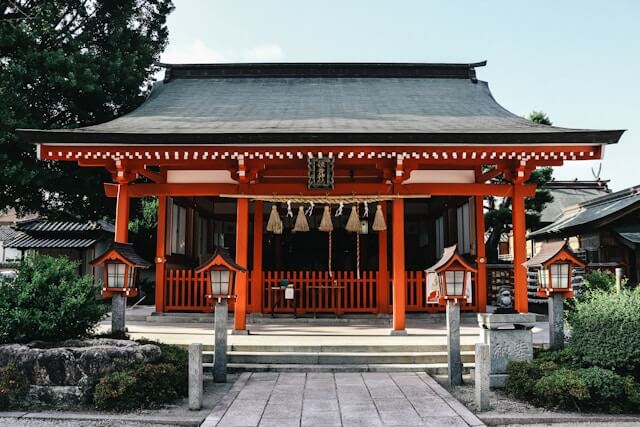
When studying Japanese, you may sometimes feel confused not by the language itself, but by the way of thinking behind it.
Why does the beauty of cherry blossoms feel so meaningful to Japanese people precisely because they disappear so quickly?
Why is cleanliness in Japan often connected not only to hygiene, but also to a deeper sense of purity and respect?
And why do many people say, “I’m not religious,” while still visiting shrines at New Year and visiting family graves during Obon?
Behind these everyday behaviors and values are the deep influences of Shinto and Buddhism.
Of course, most modern Japanese people do not consciously think about these beliefs in their daily lives. However, ideas such as respect for nature, harmony with others, the spirit of “mottainai” (avoiding waste), and gratitude toward ancestors still quietly live on in the Japanese language and in everyday life.
At Oku Sensei’s Japanese, we believe it is important to learn Japanese not simply as a language, but as something deeply connected to the hearts, culture, and values of Japanese people.
In this article, we will clearly explain what Shinto and Buddhism are, the values that grew from them, and how these ideas continue to shape life in modern Japan today.
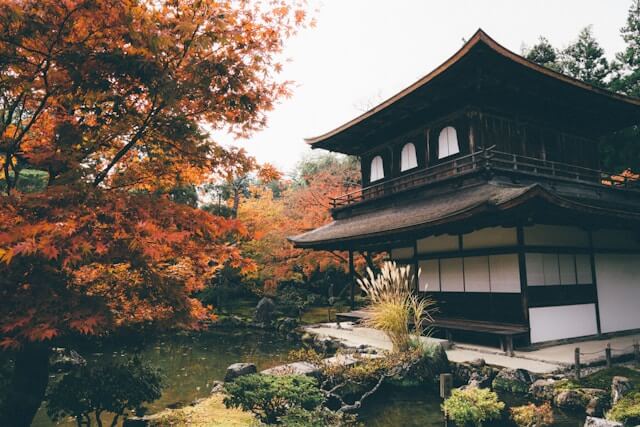
First, let’s take a look at Shinto and Buddhism, two belief systems that have deeply influenced the Japanese way of thinking.
Shinto is a belief system that grew naturally out of ancient Japanese life and traditions, and it does not have a single founder or sacred scripture.
For centuries, Japanese people lived closely connected to nature through activities such as rice farming. As they experienced nature’s blessings—as well as its power and unpredictability—they came to sense the presence of divine spirits within it.
In Shinto, it is believed that spirits, or “kami,” dwell in all things. These may include gods connected to nature, such as the sea and mountains, gods associated with daily life like food, clothing, and shelter, as well as historical figures who contributed to the country and even ancestors within each family.
Buddhism is a religion that began in India with the teachings of Shakyamuni Buddha.
One of the fundamental ideas of Buddhism is that everything in life is constantly changing and interconnected. By understanding that life cannot always go exactly as we wish, people can gradually free themselves from suffering.
Buddhism is believed to have been introduced to Japan in the year 538, and since then, many Buddhist monks have spread its teachings throughout the country.
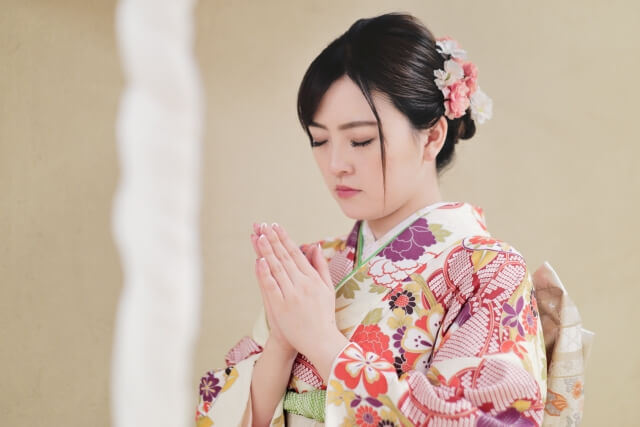
Many Japanese people do not clearly distinguish between Shinto and Buddhism, and it is not uncommon for people to describe themselves as “non-religious.”
However, in everyday life in Japan, it is very natural for people to combine elements of both traditions without feeling any contradiction—for example, visiting a Shinto shrine for Hatsumōde (the first shrine visit of the New Year) while also visiting family graves during Obon, a Buddhist-related tradition.
This ability to peacefully embrace both Shinto and Buddhist customs within daily life is one of the unique characteristics of Japanese culture.
Some of the Japanese values influenced by Shinto and Buddhism include:
Let’s take a closer look at these five values.
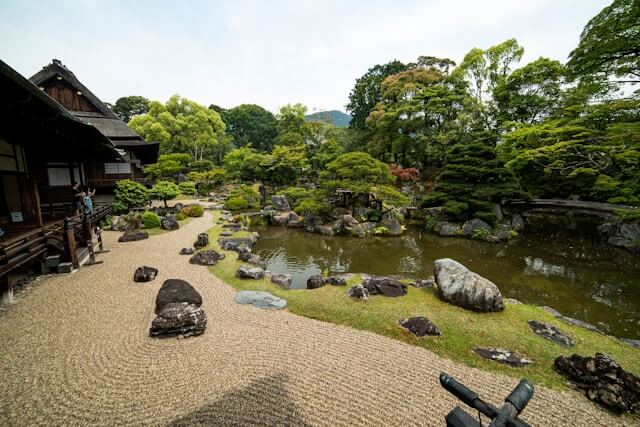
The Japanese tendency to value nature as something to live in harmony with is often connected to the Shinto belief that spirits dwell within all things in nature.
Since ancient times, nature in Japan has not been viewed as something humans should control, but rather as something to respect, appreciate, and live alongside.
The uniquely Japanese emphasis on harmony, known as “wa,” is also thought to be influenced by both Shinto and Japanese Buddhism.
For example, Shinto teaches the importance of maintaining harmony with nature and society while treating others with respect.
In addition, the Seventeen-Article Constitution established by Prince Shōtoku, who helped spread Buddhism in Japan, contains the famous phrase:
“Wa o motte tōtoshi to nasu”
(“Harmony should be valued above all.”)
Both Shinto and Buddhism contributed to the Japanese cultural tendency to prioritize group harmony and social peace.
At the same time, the Japanese spirit of harmony was not shaped by religion alone. It was also influenced by Confucianism, life within close-knit communities, and Japan’s historical social structure over many centuries.
★Also try reading:
Why You Feel Isolated Living in Japan | Language & Culture Explained
Another value connected to Japanese thinking is the Buddhist concept of “shogyō mujō,” which teaches that nothing in this world remains permanent forever.
Because all things continue to change, Japanese people often cherish the changing seasons and feel beauty in things that are fleeting or temporary.
This idea is also connected to the belief that life and objects should not be treated carelessly, which is reflected in the Japanese spirit of “mottainai”—avoiding waste and valuing what one has.
In Japan, connections with people and the surrounding world are often expressed through the word “goen”, as in the phrase, “I hope we are blessed with good connections.”
This idea of “en” (connection) is closely related to Buddhist teachings, particularly the idea that all things in the world are connected through causes and relationships.
At the same time, the Japanese spirit of harmony mentioned earlier is also believed to be connected to Shinto values.
The Japanese feeling of gratitude and respect toward ancestors can also be seen as a value shaped through the blending of Shinto and Buddhism.
In Shinto, there is a concept called “keishin sūso,” which teaches respect for the gods and reverence for one’s ancestors.
Meanwhile, in Japanese Buddhism, praying for ancestors is believed to help people feel connected to them and appreciate the fact that their own lives exist because of those who came before them.
Both of these traditions continue to influence the Japanese sense of respect and gratitude toward ancestors today.
Here, we will introduce the Shinto and Buddhist culture that is woven into Japanese daily life, divided into the following five categories:
Let’s take a closer look at these uniquely Japanese cultural practices.
The Japanese custom of saying “itadakimasu” before a meal and “gochisōsama” after finishing a meal is connected to Buddhism.
These words express gratitude and prayer toward the lives of the rice, vegetables, meat, fish, and other foods we are about to receive.
For this reason, “itadakimasu” is not simply a greeting before eating. It is also a way of expressing gratitude for the lives of the ingredients, the people who prepared the meal, and the fact that food is present before us.
In addition, shōjin ryōri, a style of cooking made only with plant-based ingredients and without meat or fish, was born as the food of Buddhist monks in training and has been deeply connected to the development of Japanese cuisine.
★Also try reading:
Deepen Your Understanding of Japanese Culture and Traditions! A Detailed Guide to 12 Iconic Traditions
In Japan, bathing every day is common. This is thought to be connected to a blend of the Shinto practice of misogi, in which people enter water to wash away impurities and spiritual defilement, and the Buddhist idea of purifying oneself as part of spiritual practice.
In addition, when Japanese people put their hands together before or after meals, or when mourning someone who has passed away, this gesture is said to express gratitude as well as a prayer for the peaceful passing of the deceased.
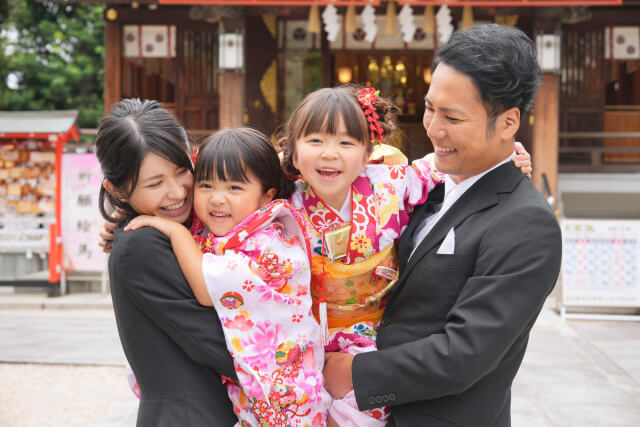
Japanese life rituals include hatsumairi, where prayers are offered at a temple around one month after a baby is born; Shichi-Go-San, where children’s growth is celebrated at ages three, five, and seven with prayers at a shrine; and Shinto-style weddings, where couples make their marriage vows at a shrine. Each of these rituals is connected to Shinto or Buddhism.
Because Shinto and Buddhist customs have blended together in Japan, many life rituals may be held at either a shrine or a temple without being seen as contradictory.
Annual events connected to Buddhism include Ohigan, when people hold memorial services for ancestors around the spring and autumn equinoxes, when this world and the next are believed to come closer, and Obon, when families welcome ancestral spirits back into their homes and offer memorial prayers.
On the other hand, annual events connected to Shinto include Hatsumōde, the first shrine visit of the New Year, where people express gratitude for the past year and pray for the year ahead, and Hinamatsuri, a festival praying for the growth of girls, which is rooted in Shinto customs of purifying sins and impurities.
Funerals and memorial services in Japan are generally conducted in the Buddhist style. Sutras are chanted at temples or funeral halls, and mourners perform oshōkō, the act of offering powdered incense while praying.
On the other hand, the custom of sprinkling salt before entering the home after returning from a funeral or crematorium comes from the Shinto belief of not bringing impurity into the home.

Japanese ways of thinking cannot be explained by Shinto and Buddhism alone.
However, the way Japanese people relate to nature, their emphasis on harmony, their gratitude for life and human connections, and their sense that “everything is always changing” still quietly remain in the Japanese language and in everyday Japanese behavior.
At the same time, Japanese values have not been shaped only by Shinto and Buddhism.
Many different elements—such as history, geography, community life, Bushidō, Confucianism, and social changes after World War II—have overlapped to form the ways modern Japanese people think and communicate.
That is why learning Japanese deeply is not simply about memorizing vocabulary and grammar.
It is also about gradually understanding the feelings that lie deep within the Japanese heart, such as “Why do Japanese people say it this way?”, “Why don’t they say things directly in this situation?”, and “Why does this behavior feel natural in Japan?”
At Oku Sensei’s Japanese, you can learn not only the Japanese language, but also Japanese ways of thinking, culture, history, and values rooted in daily life from Oku Sensei, who has taught Japanese at American universities for over 20 years.
If you would like not only to become able to speak Japanese, but also to deeply understand the hearts and culture of Japanese people, please consider taking advantage of the free 30-minute consultation offered by Oku Sensei’s Japanese.