- Learning Japanese
- Japanese Culture
2026.04.22


One way to learn Japanese history is by watching anime.
However, since there are so many different anime in Japan, many people may wonder, “Which works should I choose to learn history?”
In this article, we will explain the benefits of learning Japanese history through anime, introduce 9 recommended anime for learning Japanese history, and discuss the points to keep in mind when learning history through anime.

The benefits of learning Japanese history through anime are as follows:
Here, we will introduce the three benefits mentioned above.
In general, history is often perceived as “difficult,” but anime, with its entertainment elements, draws viewers into its world, making it easier to spark an interest in learning.
If anime inspires curiosity and interest, you may find yourself becoming more deeply engaged in studying history.
Anime recreates aspects such as food, clothing, architecture, and social conditions of the time through visuals, making it easier to understand history in a visual way.
Even if you feel that “studying from textbooks is difficult,” having a visual sense of the historical atmosphere can make subsequent learning much easier.
Some historical anime are based on real historical figures, which helps you feel a sense of familiarity with the characters and increases your interest in the era in which they lived.
Historical figures who feel more familiar are easier to remember, allowing you to learn while enjoying the process.
★Also try reading:
Discover Japanese Culture Through Anime! 6 Carefully Selected Anime That Bring Japan’s Traditions to Life
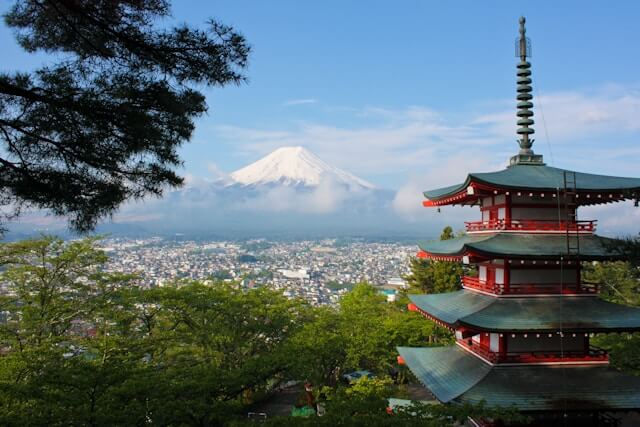
From here, we will introduce 9 recommended anime for learning Japanese history:
If you are wondering, “What kind of anime should I watch?”, please use this as a reference.
The anime “The Heike Story” is based on the war tale “The Tale of the Heike,” which has been passed down since the Kamakura period in Japan.
Set in the late Heian period, it features historical figures such as Taira no Kiyomori, who actually existed in Japan’s past, and allows viewers to learn about the fall of the Taira clan through beautiful and delicate storytelling.
“Rurouni Kenshin” tells the story of Himura Kenshin, a swordsman once feared as “Hitokiri Battosai” during the Bakumatsu period, who vows never to kill in the Meiji era and lives in a new age while confronting his past.
Through this work, you can gain a sense of how people, especially samurai, struggled to find their way of life during the transition from the Edo period’s samurai society to the modern nation of the Meiji era.
★Also try reading:
What Is Bushidō—And Why It Still Shapes Japan Today
“The Elusive Samurai” is set during the Kamakura to Nanboku-chō period and follows the story of Hōjō Tokiyuki, the heir to the Kamakura shogunate regent, who throws himself into battle in order to reclaim Kamakura.
This work is based on the Nanboku-chō period, which is rarely featured in Japanese history settings, and allows viewers to deepen their understanding not only of historical facts but also of the culture of the time, such as housing and clothing.
“Golden Kamuy” is set in Hokkaido during the late Meiji period and tells the story of Saichi Sugimoto, a hero of the Russo-Japanese War, who, together with his companions, engages in a battle for hidden Ainu gold.
The traditional hunting, cuisine, language, and rituals of the Ainu people, the indigenous people of Hokkaido, are depicted alongside entertainment elements, and after watching, you may feel inspired to learn more about Ainu history.
“Sengoku BASARA” is set during the Sengoku period, depicting warlords such as Date Masamune and Sanada Yukimura striving to unify the country.
Although it is a work with strong fictional elements, it is also based on historical facts, making it a great starting point for those who think, “I want to learn Japanese history, but I’m not good with difficult material.”
“Haikara-san: Here Comes Miss Modern” is a story set in the Taishō period, in which the tomboyish protagonist Benio Hanamura experiences a dramatic romance with her fiancé, the military officer Shinobu Ijuin.
With careful depictions of the historical background—from the Taishō Democracy to the Great Kantō Earthquake—including customs such as arranged marriages between families, this work is recommended for those who want to learn about Japanese culture of that time.
“The Wind Rises” is a Studio Ghibli film set in Japan during the turbulent period from Taishō to early Shōwa, depicting the life of a protagonist modeled after the designer of fighter planes used by Japan during World War II.
It incorporates real historical events such as the Great Kantō Earthquake and the financial crisis of early Shōwa, and has received high international acclaim.
“Grave of the Fireflies” is a Studio Ghibli film that portrays the lives of Seita, a 14-year-old boy who loses his mother in air raids, and his younger sister Setsuko, during the final stages of World War II.
This work deeply conveys the social conditions of the time, including the devastation caused by air raids and the tragedy of war orphans, allowing viewers to learn about war from the perspective of ordinary civilians.
“In This Corner of the World” is an animated film set in Kure City, Hiroshima, during World War II, depicting the life of Suzu, a young woman who marries at the age of 18 and continues to live positively despite hardships.
Beyond the tragedy of war, the film portrays the real lives of people who find small joys even during wartime, as well as the strength to face difficulties, and allows viewers to gain a detailed sense of the everyday culture and values of ordinary people at the time.
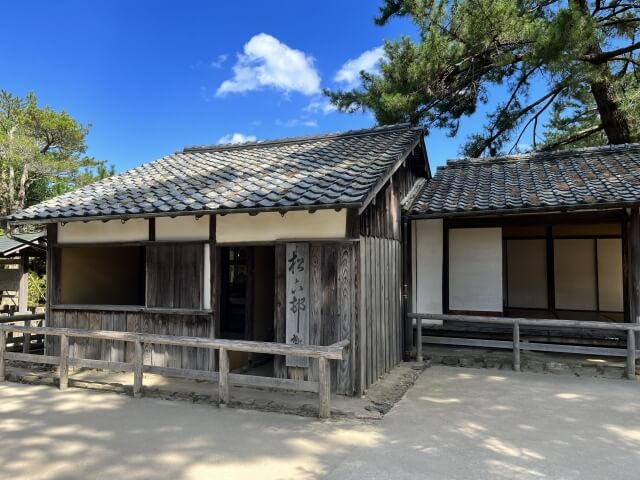
When learning Japanese history through anime, it is important to be aware that it can be difficult to distinguish what is historically accurate and what is fictional.
The content depicted in anime belongs to the world of entertainment, so it is not uncommon for fictional episodes to be added, or for characters who share the same names as historical figures to have different personalities or actions.
While anime has the great advantage of serving as a gateway to learning, if you want to learn accurate historical facts and Japanese culture, it is recommended to make use of Japanese language courses.
In this article, we explained the benefits of learning Japanese history through anime, introduced 9 recommended anime for learning Japanese history, and discussed the points to keep in mind when learning history through anime.
If you are interested in “Japanese history,” why not try learning Japanese history, culture, and the Japanese language through the online lessons offered by Oku Sensei’s Japanese?
At Oku Sensei’s Japanese, Oku Sensei, who has taught at universities across the United States for over 20 years, provides support so that each student can achieve “the life they have always dreamed of.”
Right now, Oku Sensei’s Japanese offers a “free 30-minute consultation,” so be sure to check it out.